
Network Effects in Organizations: Why Your Org Chart Doesn't Show Where Power Lives
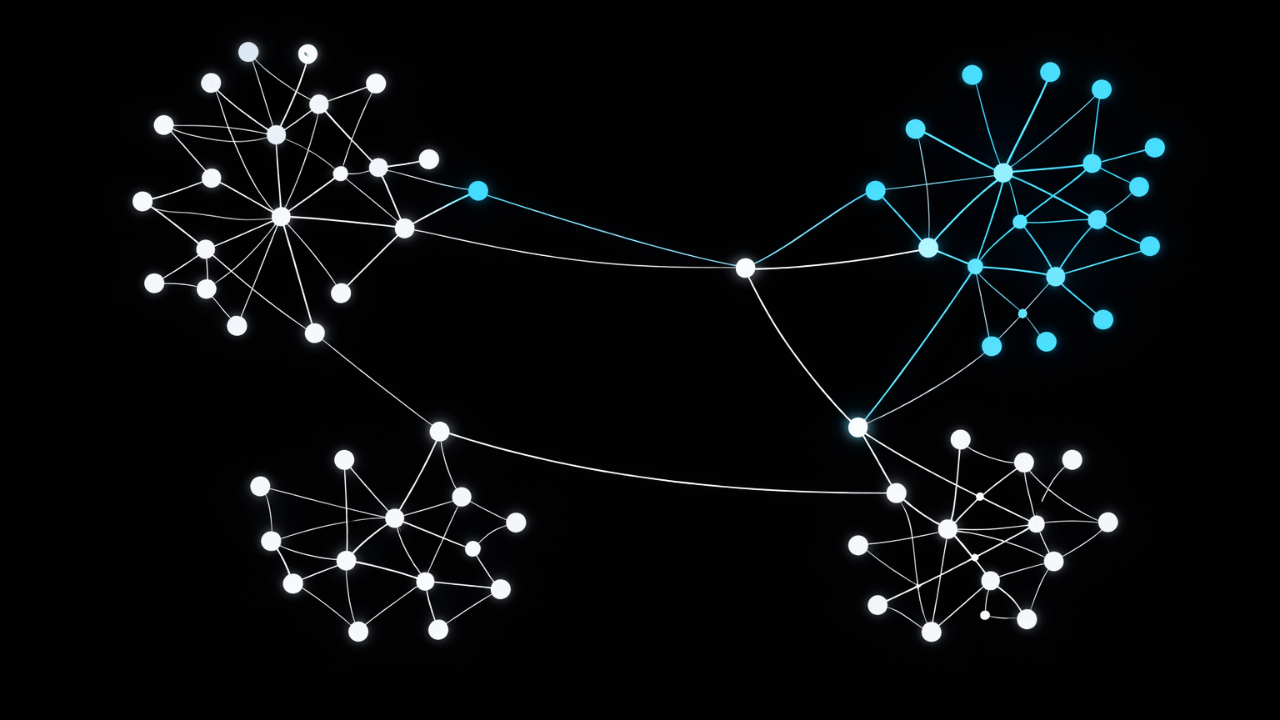
Pull up your organization chart. Clean boxes, clear reporting lines, neat hierarchy. Now ask: who actually makes things happen in your organization?
It's not the boxes. It's the invisible lines your org chart doesn't show: the person in finance who somehow gets budget approved when others can't, the mid-level engineer whose opinions shape technical direction despite having no reports, the operations manager who can coordinate across departments that supposedly don't talk to each other.
Your org chart maps formal authority. Real organizational power flows through informal networks. Understanding the difference isn't academic; it's the key to understanding why some initiatives move effortlessly while others die despite executive sponsorship, why some people have outsized influence despite modest titles, and where your organization's actual bottlenecks live.
The Formal Structure vs. The Actual Network
Organizations have two structures. The designed structure, your org chart, shows who reports to whom. The emergent structure, your actual network, shows who talks to whom, who trusts whom, who can get things done.
These structures rarely align.
The org chart optimizes for clear accountability and hierarchical control. The network optimizes for getting work done. When the two conflict, the network wins. People route around formal structure constantly; it's how organizations function despite themselves.
Network science, developed initially to understand everything from disease transmission to social movements, provides tools to map and analyze these invisible structures. The insights apply directly to organizational dynamics.
Types of Network Positions: Where Power Actually Lives
Not all network positions are equal. Your position in the informal network determines your influence independent of your title.
Central Nodes: The Information Hubs
Some people are connected to everyone. They're the ones you see at every meeting, who get CC'd on every email, who somehow know what's happening across the organization.
Centrality confers power through information access. If you're connected to many people, you see patterns others miss. You hear about problems early. You know who's working on what, where resources are, what projects are struggling.
The central node in engineering knows which teams are underwater, where technical debt is accumulating, and who has capacity. This person can't be ignored when making resourcing decisions because they have better information than anyone else, including their manager.
Centrality often comes from tenure, the person who's been around knows everyone, but it can also come from role. Executive assistants, project managers, and certain cross-functional roles naturally accumulate connections.
Brokers: The Bridge Builders
The most interesting network position is the broker, someone who bridges disconnected groups. In network science, these positions are called "structural holes": gaps in the network that only certain people span.
A broker connects engineering and sales. Operations and finance. Product and customers. These bridges are powerful because information doesn't flow naturally between these groups. The broker controls that flow.
This creates several forms of influence:
Information arbitrage: The broker sees both sides. Sales knows what customers want but not what engineering can build. Engineering knows what's possible but not what customers need. The broker who spans both groups can synthesize insights neither group has alone.
Coordination power: When groups need to work together, they need someone who speaks both languages and knows both contexts. The broker becomes essential for cross-functional work.
Innovation advantage: Breakthrough ideas often come from combining insights from different domains. The broker is positioned to see these combinations because they have a foot in multiple worlds.
One retail company discovered that their most valuable employee, in terms of enabling company-wide projects, was a senior analyst who'd moved from finance to operations to merchandising. She had no direct reports and wasn't senior leadership. But every major initiative ran through her because she was the only person who understood all three domains and had relationships across them. The org chart showed her as middle management. The network showed her as a critical node.
Peripheral Nodes: The Disconnected
Some people are on the edge of the network: few connections, limited information access, minimal influence over decisions.
This isn't always problematic. Some roles require deep focus rather than broad connection. Certain specialists need to optimize for depth, not breadth.
But peripheral positions can be created accidentally through poor onboarding, geographic isolation, or organizational neglect. Remote workers often become peripheral not because they're less competent but because they're excluded from the informal conversations where information flows and relationships form.
The problem with peripheral positions: they're blind spots. Peripheral nodes don't know what they don't know. They can't influence decisions they don't hear about. They duplicate work happening elsewhere because they're not connected to the people doing it.
Gatekeepers: The Controllers
A gatekeeper controls access to critical resources or information. Unlike a broker who facilitates flow, a gatekeeper can block it.
The department head whose approval is required for budget allocation. The tech lead who controls access to production systems. The admin who manages the CEO's calendar. These positions derive power from controlling what others need.
Gatekeepers can be productive; they prevent chaos and maintain standards. Or they can be bottlenecks, slowing work and creating dependencies. The difference is whether they use their position to facilitate or to accumulate power through artificial scarcity.
Why Brokers Have Disproportionate Power
Network research consistently finds that brokers, people who span structural holes, have influence disproportionate to their formal authority.
Consider two people with the same title and the same number of connections. One has all connections within their department. The other has connections scattered across departments. The second person has far more influence because they can:
Facilitate or block coordination between groups. When engineering needs to talk to sales, it goes through the broker. When finance needs operations data, the broker can provide context. This dependency creates leverage.
See opportunities others miss. A sales problem might have an engineering solution, but only the broker connecting both groups would see it. A finance process might create operations headaches, but only the broker would connect the dots.
Build cross-functional influence. Helping someone in sales doesn't help someone in engineering, unless you're connected to both. The broker can build political capital across the organization by facilitating exchanges between disconnected groups.
The research on structural holes, pioneered by sociologist Ronald Burt, shows that people who span structural holes get promoted faster, have higher compensation, and are more likely to generate valuable ideas than people with the same number of connections concentrated within a single group.
This has direct implications: if you want to develop high-potential talent, put them in broker positions early. If you want to identify hidden influencers, map who bridges disconnected parts of your organization. If you want to accelerate innovation, create more broker positions.
Common Network Pathologies
Organizations develop predictable network problems.
Siloes: When Groups Disconnect
Siloes aren't just cultural phenomena; they're network structures. When engineering and sales don't talk, when regional offices don't coordinate, when departments don't share information, you have structural holes with no brokers to span them.
The consequence: duplication of effort, conflicting priorities, missed opportunities. Engineering builds features sales can't sell. Sales promises capabilities engineering can't deliver. Each group optimizes locally while collective performance suffers.
The org chart often creates siloes by defining boundaries that become real. Just because two departments report to the same SVP doesn't mean they talk to each other.
Bottlenecks: When One Person Controls Critical Flow
A bottleneck is a single node through which too much information or coordination must pass. Often it's a manager who insists on being involved in every decision, or a technical expert who's the only one who understands a critical system.
Bottlenecks create delays and fragility. Everything waits for the bottleneck's attention. If the bottleneck is unavailable, work stops. If the bottleneck leaves, organizational knowledge leaves with them.
The insidious part: bottlenecks are often rewarded for being indispensable. But indispensability at the individual level creates vulnerability at the organizational level.
Echo Chambers: Dense Internal Connections, No External Links
Some teams become echo chambers, densely connected internally but isolated from the rest of the organization. Everyone talks to everyone else within the group, but no one has strong connections outside it.
Echo chambers reinforce existing views and miss external signals. The tightly-knit engineering team that builds technically elegant solutions disconnected from customer needs. The senior leadership team that talks only to each other and loses touch with operational reality.
Dense internal connection isn't inherently bad; it can accelerate coordination within the team. The problem is the absence of external connections that would bring in new information and perspectives.
Fragmentation: Multiple Disconnected Sub-Networks
Fragmentation happens when an organization splits into disconnected sub-networks with minimal interaction. The regional offices that operate independently. The acquired company that never integrates. The remote team that becomes its own entity.
Fragmented networks prevent organizational learning and coordination. Best practices don't spread. Resources don't flow to where they're needed. The organization can't act as a unified entity because there's no actual organizational network, just isolated pockets.
Network Analysis for Executives: Practical Application
Understanding network theory matters only if you can apply it.
Identify Your Organization's Brokers
Who bridges disconnected parts of your organization? These people are invisible on the org chart but critical to how work gets done.
Start simple: who gets called when cross-functional coordination is needed? Who do people go to for introductions to other departments? Whose departure would sever connections between groups?
Many organizations discover their most valuable brokers are people they've overlooked for promotion because they don't fit traditional advancement criteria. They don't manage large teams or own major P&L. But they enable everyone else's work.
Map Structural Holes
Where don't groups talk to each other that should? Where does information flow break down? These gaps are your structural holes.
Common structural holes: technical teams and business teams, headquarters and field operations, product development and customer-facing teams. These disconnects are predictable and expensive.
The question isn't whether structural holes exist; they always do. It's whether you have sufficient brokers spanning them or whether coordination gaps are crippling your operations.
Find Hidden Influence
Who has central network positions but no formal authority? These people have influence through information access and relationships, not title.
They're worth paying attention to. They often know more about organizational reality than people several levels above them. They can make or break initiatives because people trust them.
Ignoring informal influence doesn't make it go away; it just means you're flying blind about how decisions actually happen in your organization.
Diagnose Information Flow Breakdowns
When projects fail to coordinate, when decisions get made without critical information, when groups duplicate effort, these are often network failures, not people failures.
The project failed because no one bridged engineering and operations. The decision was made badly because the people who had relevant information weren't connected to the decision-makers. Groups duplicated effort because there was no broker connecting them.
Network analysis reframes "communication problems" as structural problems with structural solutions.
Designing Networks Intentionally
Most organizations let networks emerge accidentally. You can design them deliberately.
Create Broker Positions Through Cross-Functional Teams
Formal cross-functional teams create broker positions by necessity. If someone from engineering and someone from sales work together on a project, they become bridges between those departments.
The key is making these roles genuine, not ceremonial. Rotating people through cross-functional projects builds bridges across the organization. Making cross-functional experience a promotion requirement ensures senior leaders understand multiple domains.
Rotate People to Build Network Connections
Rotation programs build organizational networks by giving people experience, and relationships, across different areas.
The analyst who rotates through finance, operations, and strategy builds connections across all three. Years later, those connections enable coordination that wouldn't otherwise happen.
This is costly in the short term; you're moving people who've built expertise in one area to start learning another. The long-term payoff is an organization that can coordinate across boundaries because people have relationships across those boundaries.
Identify and Empower Brokers
Once you've identified your critical brokers, protect them. These people are structural lynchpins; their departure creates coordination breakdowns.
This doesn't necessarily mean promoting them into management. Many brokers are valuable precisely because they're hands-on and connected to operational reality. Promoting them into administrative roles might remove them from the networks that make them valuable.
Instead, compensate them appropriately for organizational impact, give them the autonomy to continue bridging groups, and don't force them into career paths that would reduce their brokerage value.
Create Redundancy for Critical Flows
Single points of failure are dangerous. If one person bridges two critical groups, develop backup bridges.
This might mean deliberately creating overlapping roles, rotating people through broker positions to distribute connections, or institutionalizing forums where cross-group interaction happens routinely.
The goal isn't efficiency; it's resilience. Redundant bridges prevent organizational paralysis when a key broker leaves or changes roles.
Break Up Overly Dense Cliques
Dense internal connections can be valuable, but isolated cliques are dangerous. If a team only talks to each other, they need forced exposure to external perspectives.
Require team members to work on cross-functional projects. Create forums where teams present work to other departments. Rotate people through different teams periodically.
The goal is maintaining internal cohesion while preventing isolation.
Matrix Organizations as Network Design
Matrix organizations, where people report to both functional and project managers, are essentially attempts to institutionalize broker positions.
The theory: make people formally responsible to multiple domains so they bridge those domains structurally.
The reality: matrix organizations often fail because formal structure can't force network connections. You can make someone report to both engineering and product, but you can't force engineering and product to trust them or share information through them.
Matrix organizations work when:
The person in the matrix position has genuine expertise in both domains
Both sides have incentives to make the relationship work
There's clarity about decision rights (who decides what)
The organization supports rather than punishes divided loyalties
They fail when:
The person is caught between conflicting objectives
Power dynamics favor one domain over the other
Decision rights are unclear, creating constant conflict
The person is blamed for not choosing sides
The matrix structure itself doesn't create broker effectiveness. Trust, shared incentives, and role clarity do.
The Limits of Network Design
You can't engineer networks perfectly. They emerge from human relationships, which can't be fully controlled.
But you can design conditions that make certain network structures more likely:
Physical proximity increases connections (yes, remote work changes networks)
Shared projects create working relationships that persist
Explicit connection-building (internal conferences, cross-team forums) can work if not purely ceremonial
Rotation builds lasting connections
Removing barriers (silos, rigid hierarchies) allows natural connections to form
The mistake is thinking you can mandate network structure. You can't force people to trust each other or share information. But you can create conditions where productive network structures are more likely to emerge.
What This Means for You
Your org chart is a fiction, useful for legal accountability and hierarchical decision-making, but largely irrelevant to how work actually gets done.
The real questions are:
Where are your critical brokers, and what happens if they leave?
Where are structural holes preventing coordination?
Who has network power independent of formal authority?
Are your promotion decisions rewarding network builders or ignoring them?
Is your network structure enabling the strategy you claim to pursue?
You can continue to ignore network structure and manage as if the org chart were real. Or you can acknowledge that power flows through networks, map those networks explicitly, and design organizations that work with network reality rather than against it.
The choice is whether to manage the organization you designed or the organization that actually exists.