

Strategic insights on hiring, retention, compensation, leadership, and organizational design. Evidence-based analysis for executives who make decisions about people and teams.
Why Q2 Reorgs Destroy Value
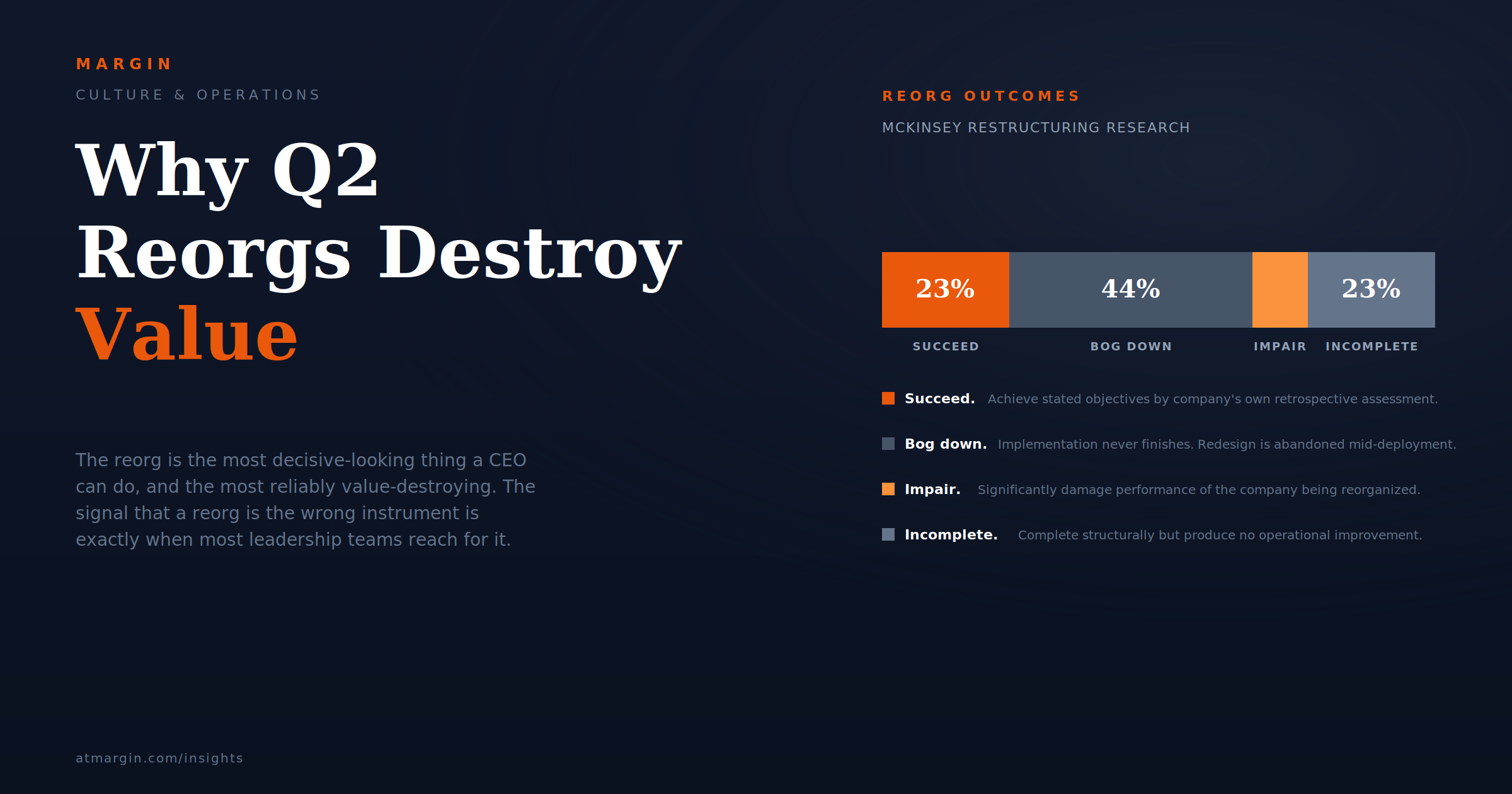
The reorg is the most decisive-looking thing a CEO can do, and the most reliably value-destroying. The signal that a reorg is the wrong instrument is exactly the moment most leadership teams reach for it.
The End of Volatility
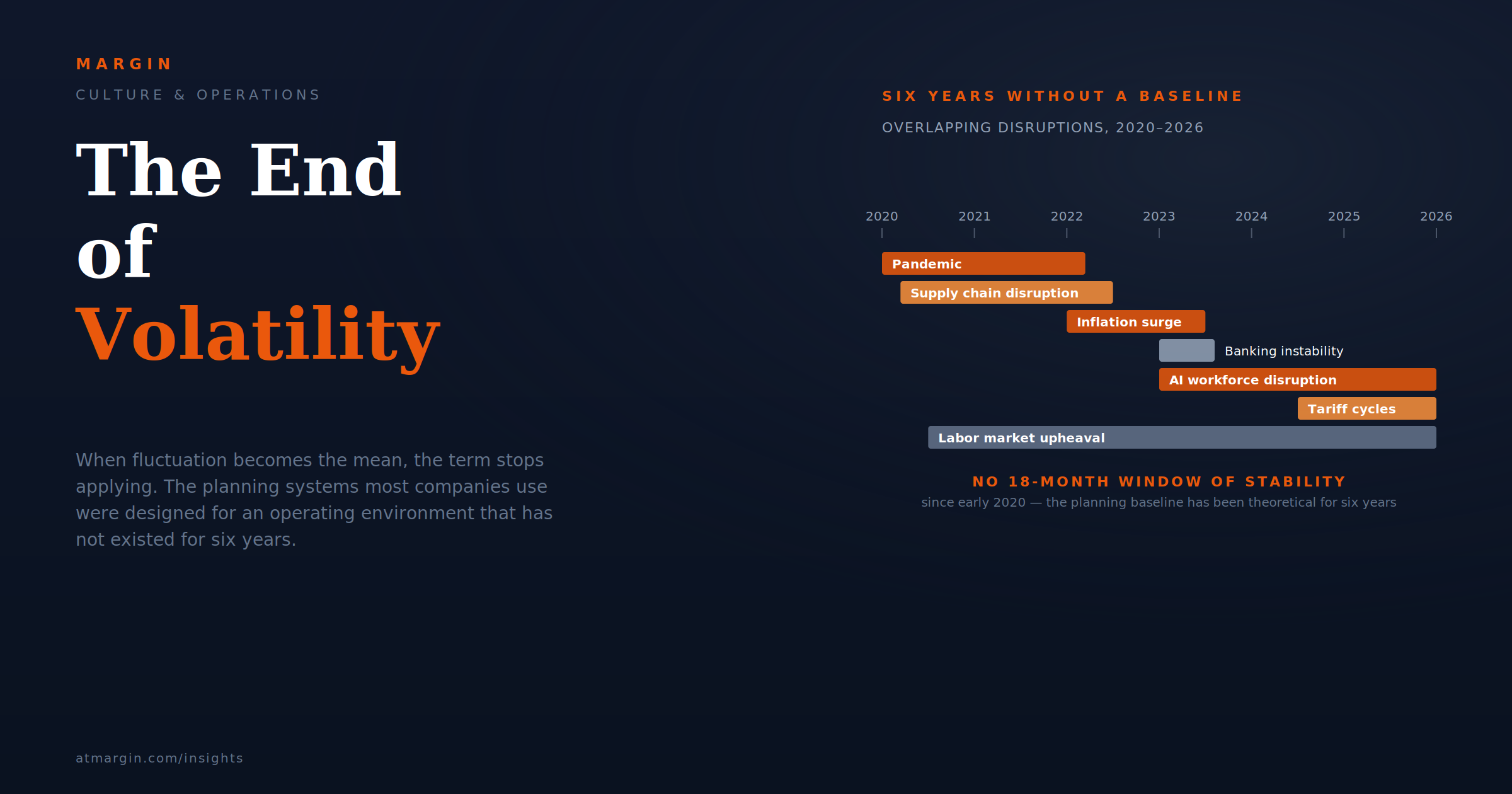
In finance, volatility describes fluctuation around a stable mean. When the fluctuation becomes the mean, the term stops applying — and the planning systems most companies still use were designed for an operating environment that has not existed for six years.
The Decision Rights Tax
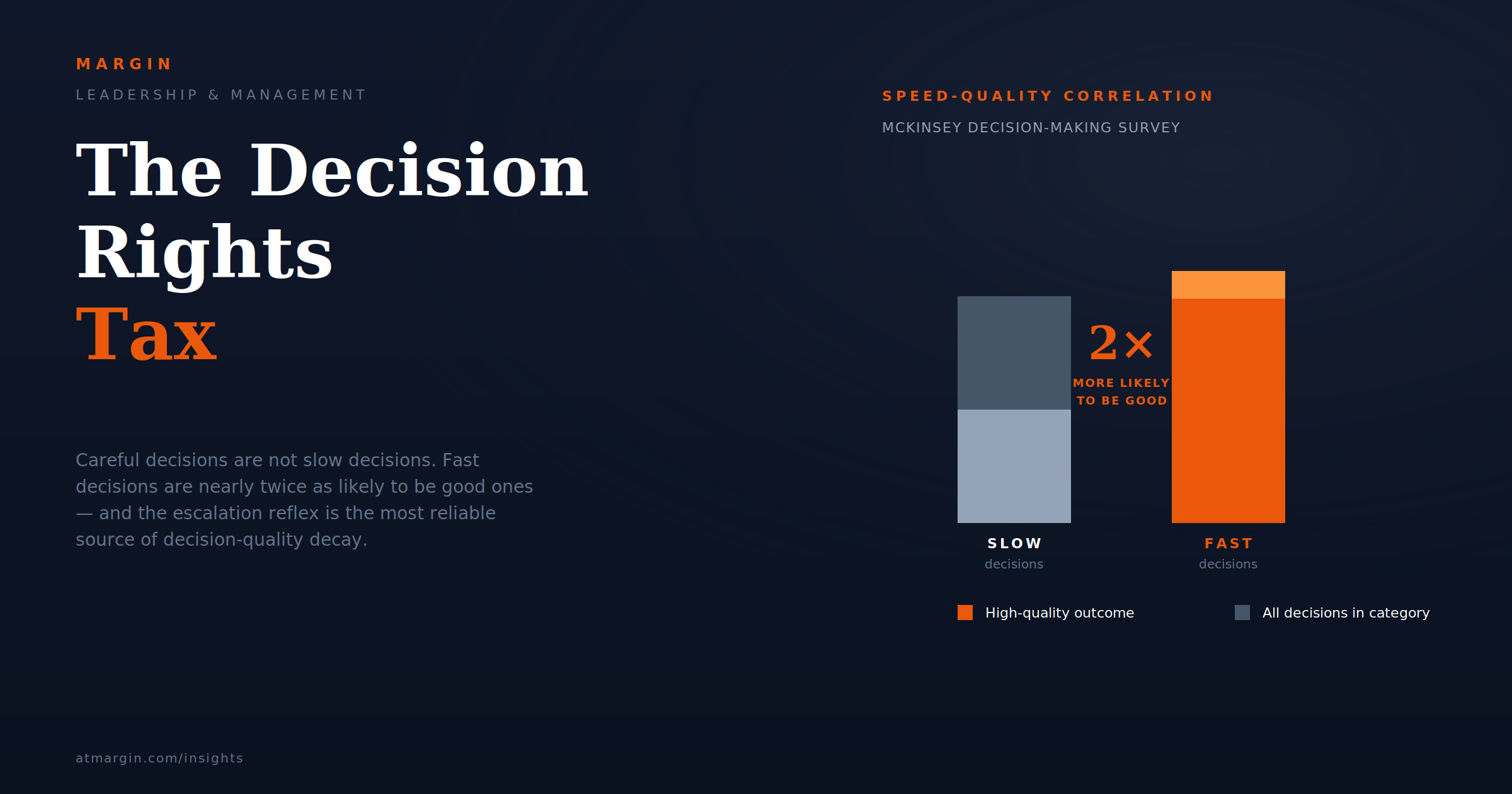
Careful decisions are not slow decisions. Fast decisions are nearly twice as likely to be good ones — and the escalation reflex most companies treat as prudent governance is the most reliable source of decision-quality decay in the modern corporation.
Six-Month Reviews Predict Nothing
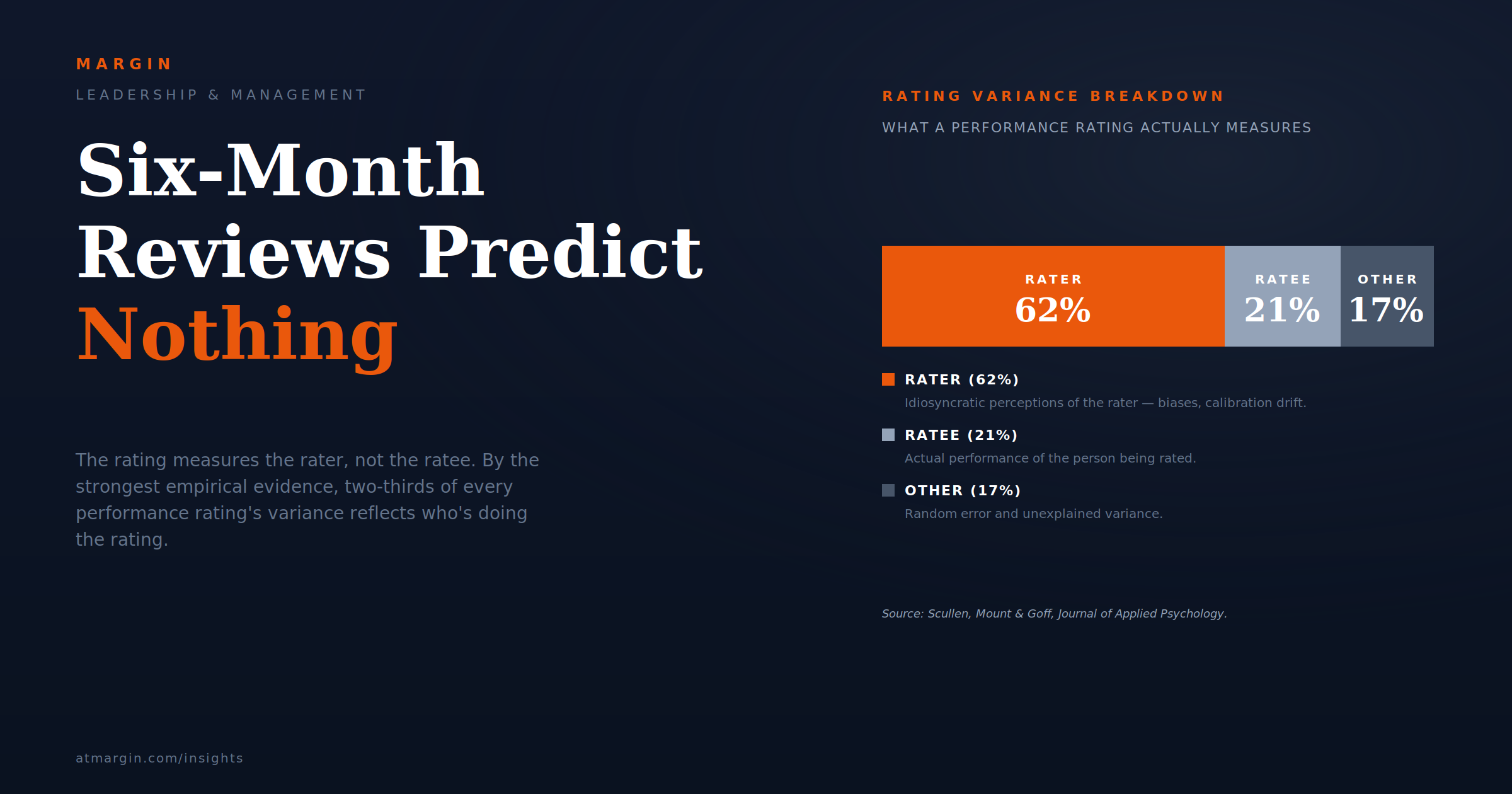
Mid-year performance reviews are not bad predictors of year-end performance. They are not predictors at all. The output is paperwork, defensive behavior, and false confidence — produced at a cost most CFOs have never modeled.
Your Comp Budget Is Already Wrong
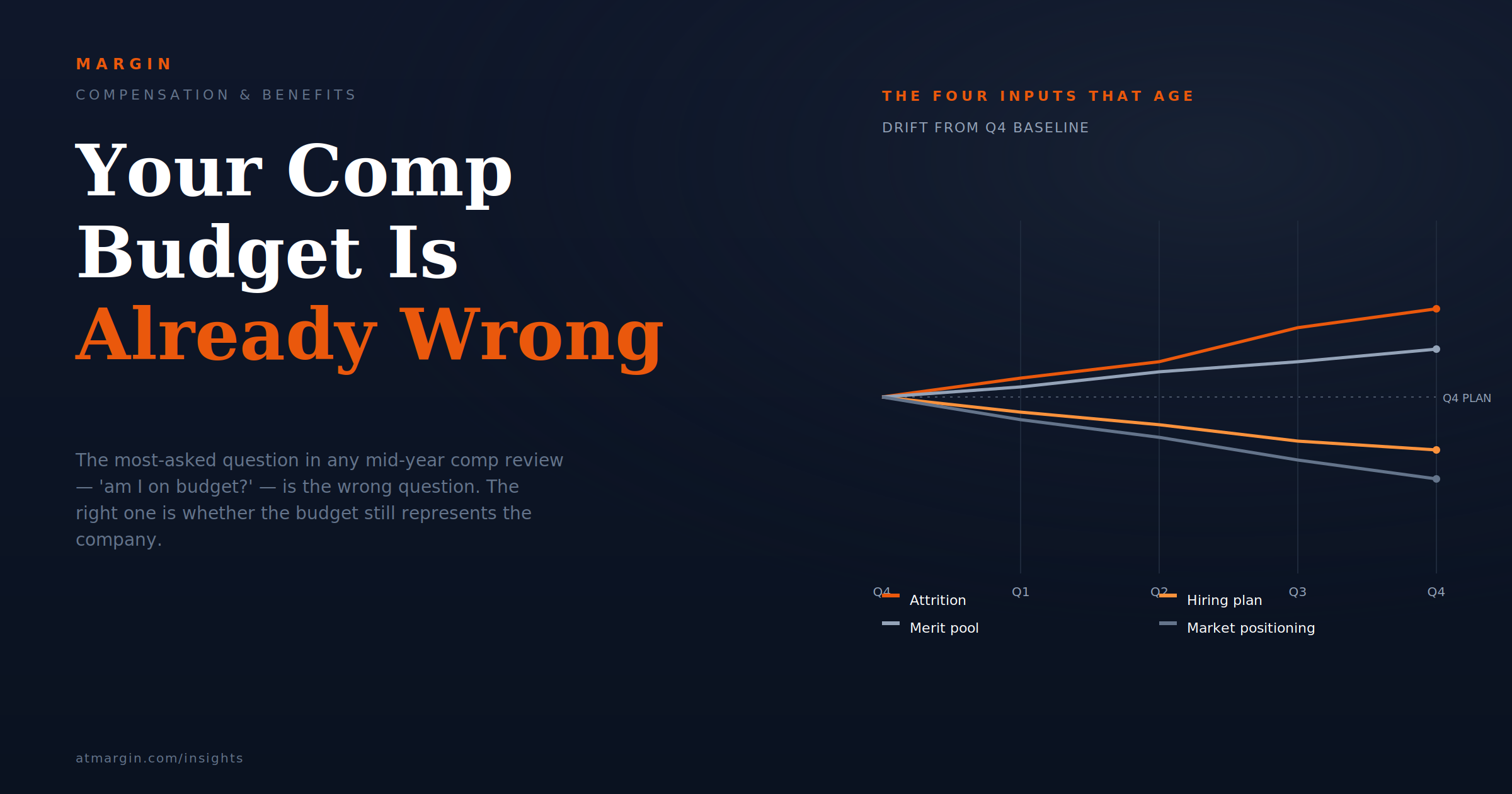
The most-asked question in any mid-year compensation review, "am I on budget?", is the wrong question, and answering it produces the wrong decisions. The right question, and the one almost no organizations are asking, is whether the budget still represents the company.
The Off-Cycle Adjustment Trap
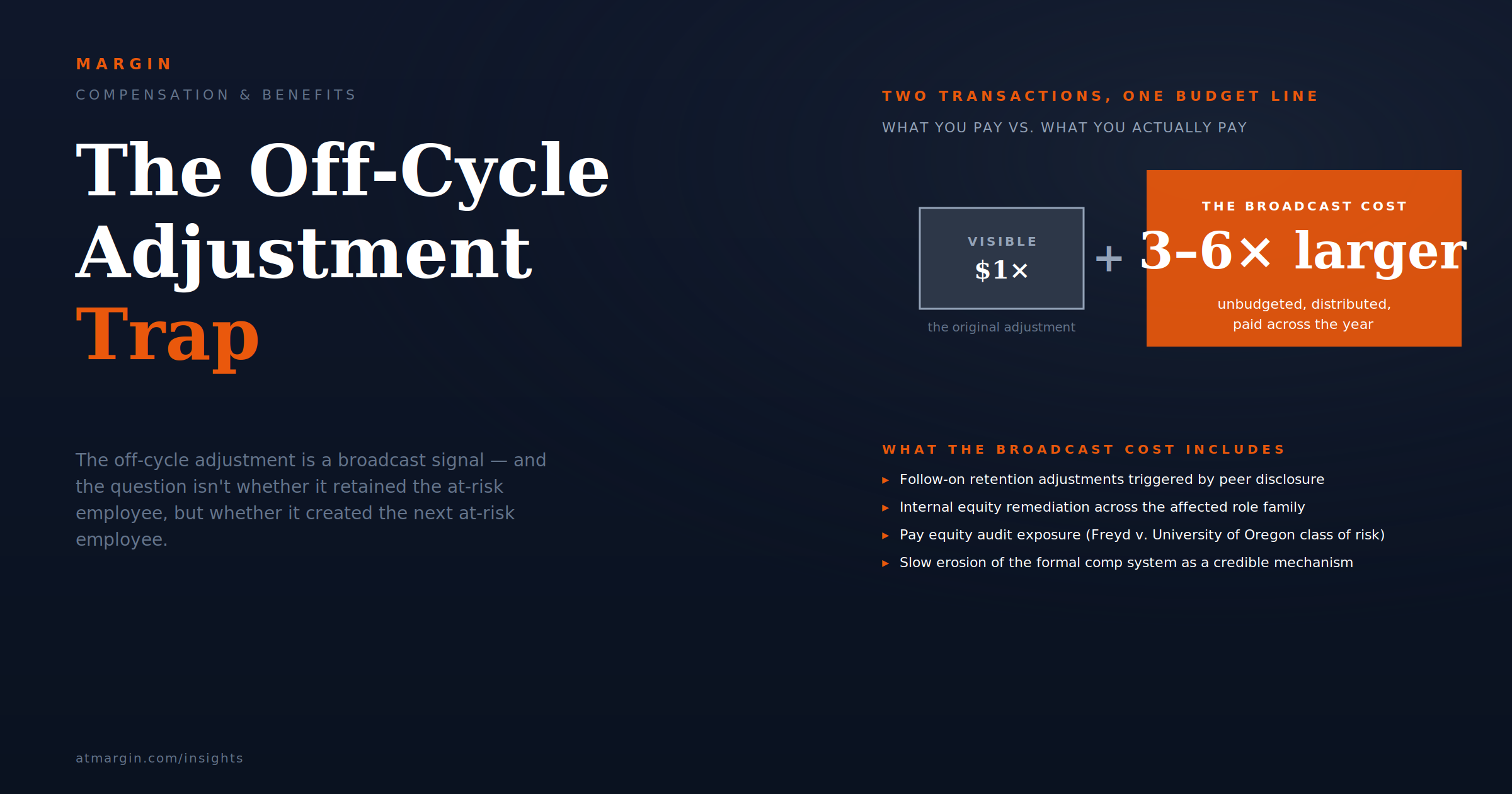
The off-cycle adjustment is treated as a surgical, contained intervention. It is a broadcast signal to the rest of the workforce — and it creates the next at-risk employee on a more reliable schedule than the one it retained.
Bonuses Cause Attrition
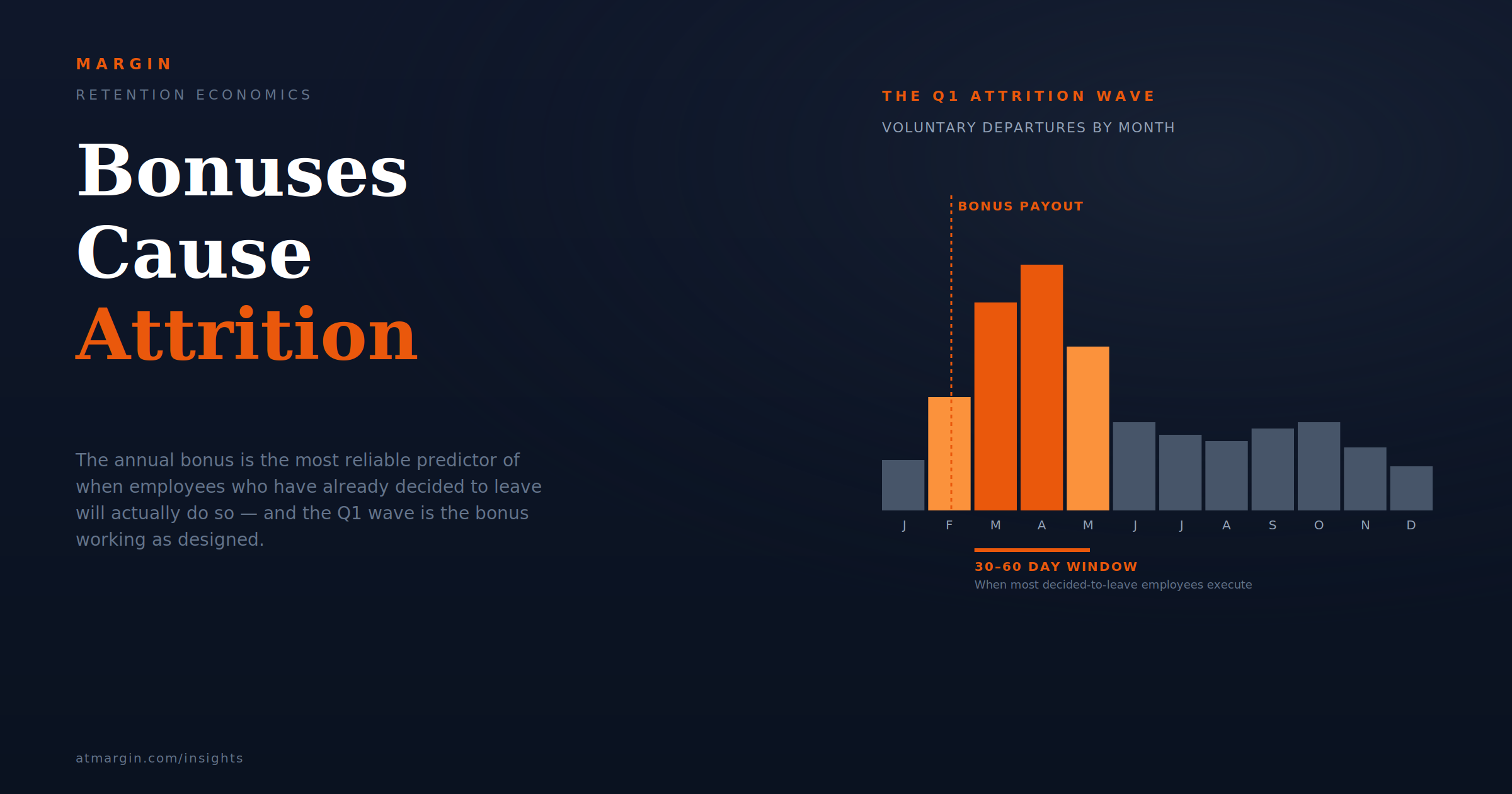
The annual bonus is treated as a retention tool. In practice it is the most reliable predictor of when employees who have already decided to leave will actually do so — and the Q1 attrition wave is the bonus working exactly as designed.
Why H1 Attrition Data Is Already Stale
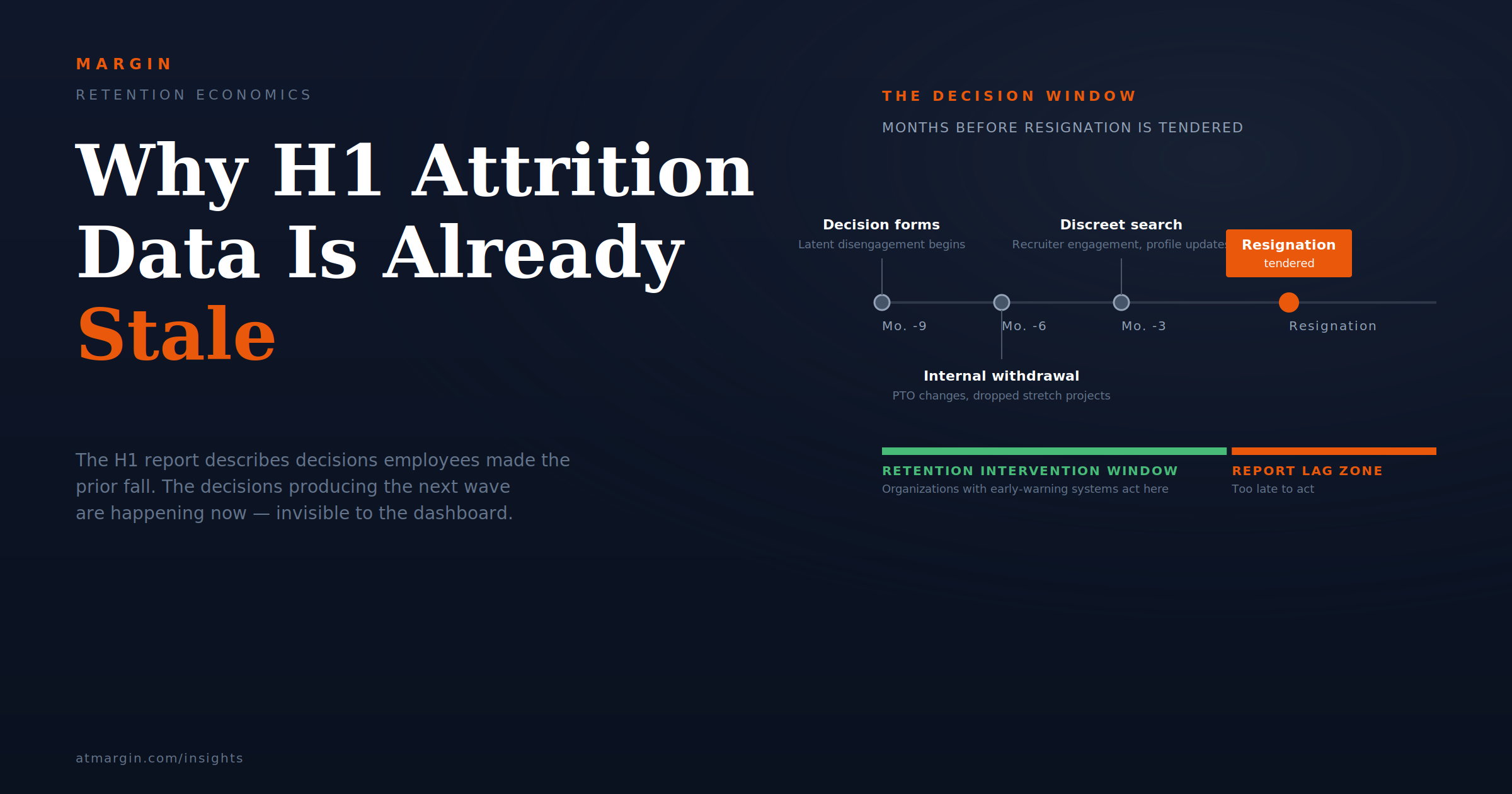
The H1 attrition report on a CFO's desk in July describes decisions employees made the prior fall. The decisions producing the next wave of departures are happening now — and the data describing them is more than a year away.
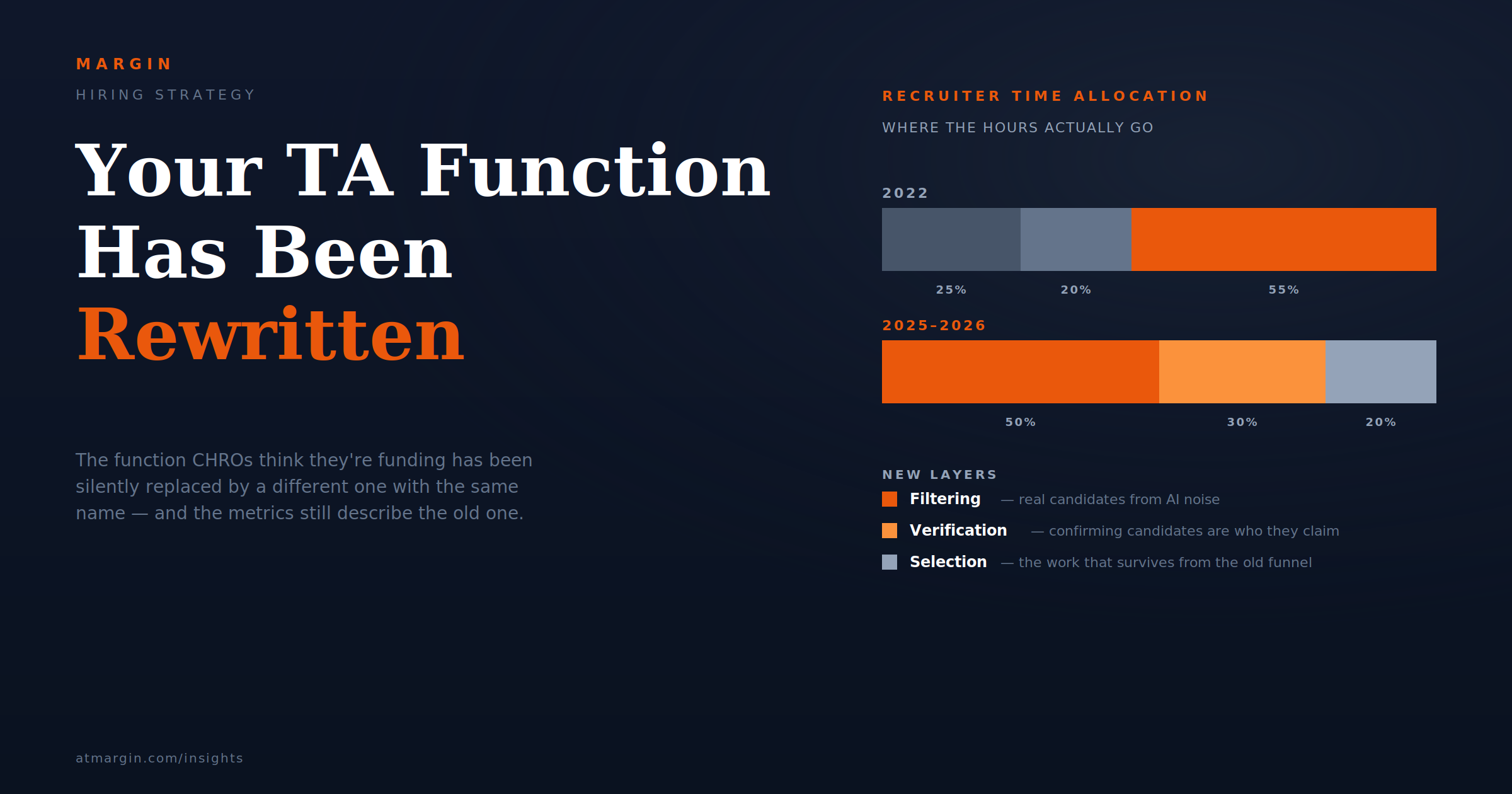
Your TA Function Has Been Rewritten
The TA function CHROs and CFOs think they are funding has been silently replaced by a different function with the same name. The metrics, budgets, and KPI architecture still describe the old one — and the team running the new one is being measured against work that no longer exists.
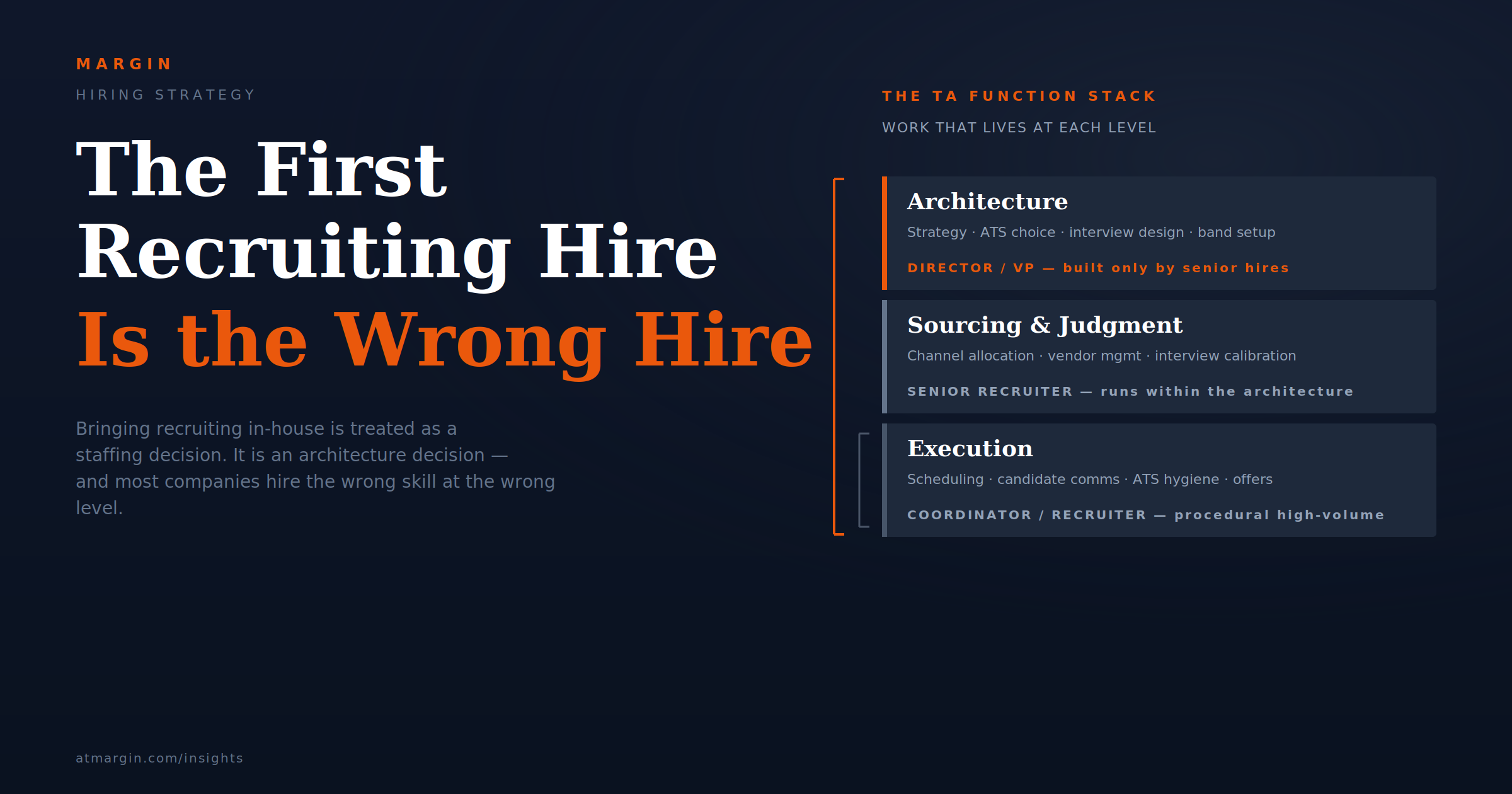
The First Recruiting Hire Is the Wrong Hire
Bringing recruiting in-house gets treated as a staffing decision when it is an architecture decision. The first hire is almost always wrong, and the rebuild eighteen months later is the cost most companies absorb without ever connecting it to the original error.
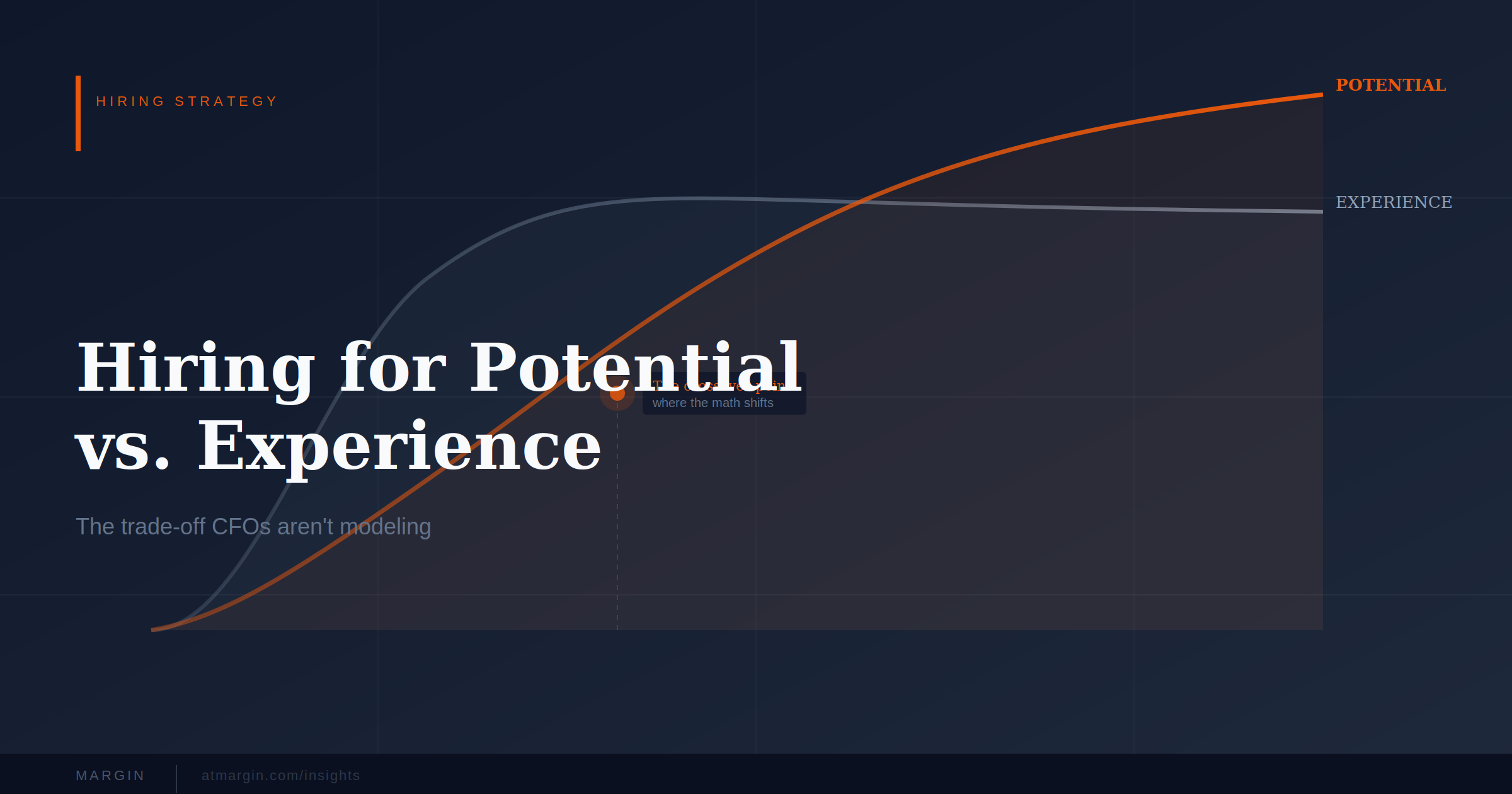
Hiring for Potential vs. Experience: The Trade-off CFOs Aren't Modeling
Defaulting to experience as a proxy for future performance feels rigorous. The data suggests it often isn't — and the cost of that assumption compounds quietly across every senior hire.
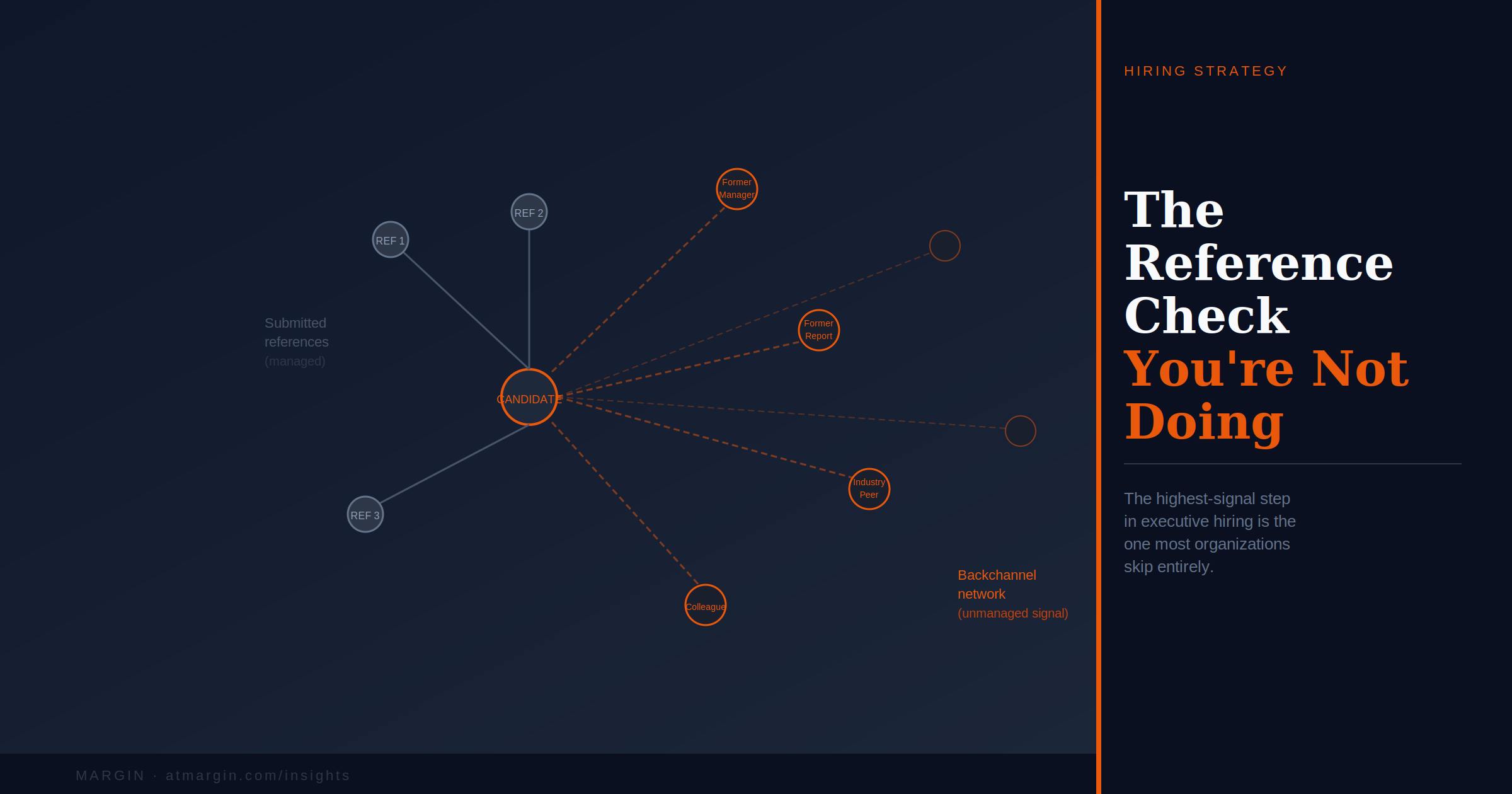
The Reference Check You're Not Doing
The references a candidate submits tell you what they want you to know. The ones they don't submit tell you what you need to know.
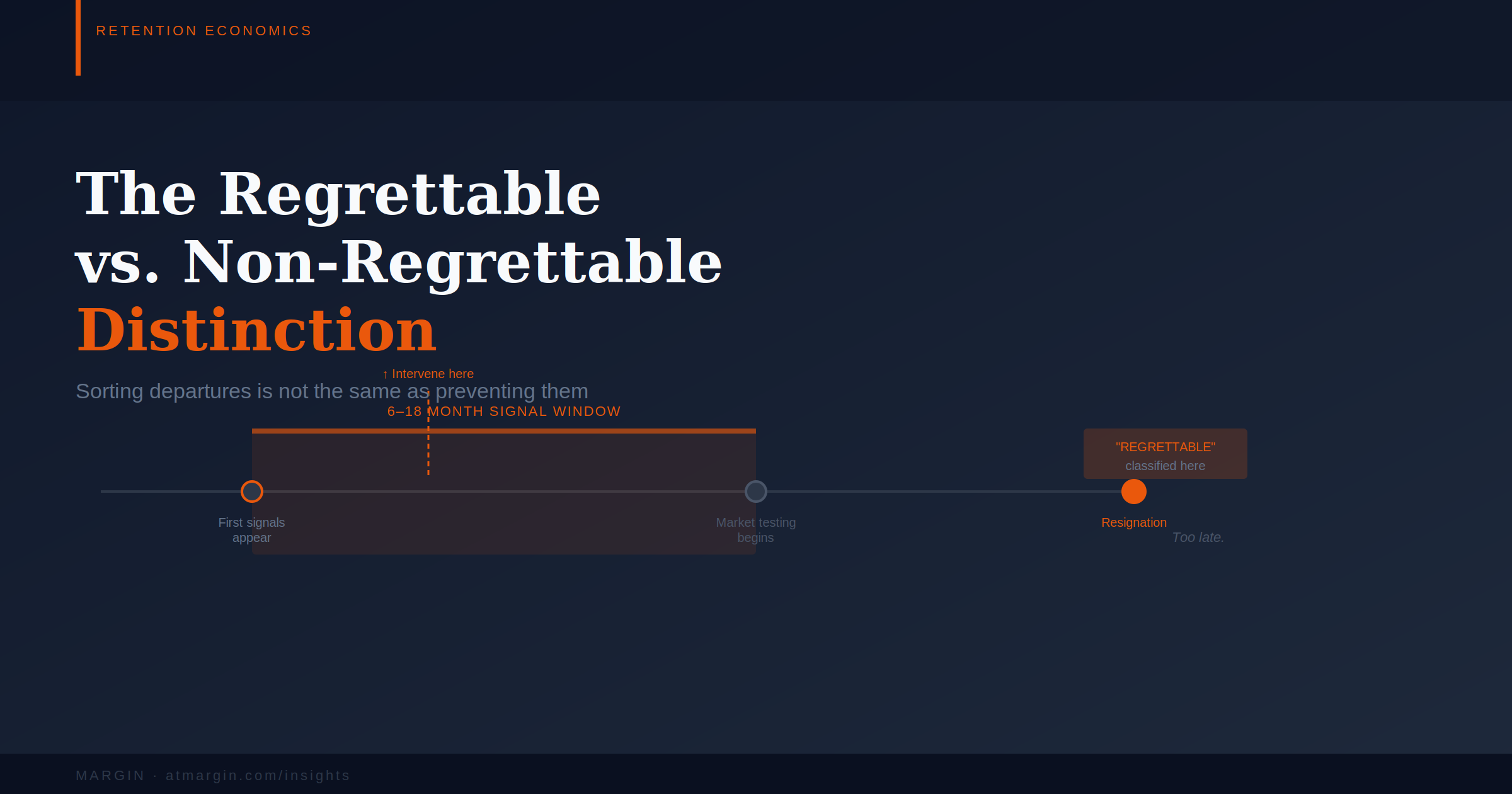
The Regrettable vs. Non-Regrettable Distinction Is Costing You
Sorting departures into regrettable and non-regrettable feels like analysis. It isn't. It's a retrospective judgment that arrives too late to be useful and too imprecise to be actionable.
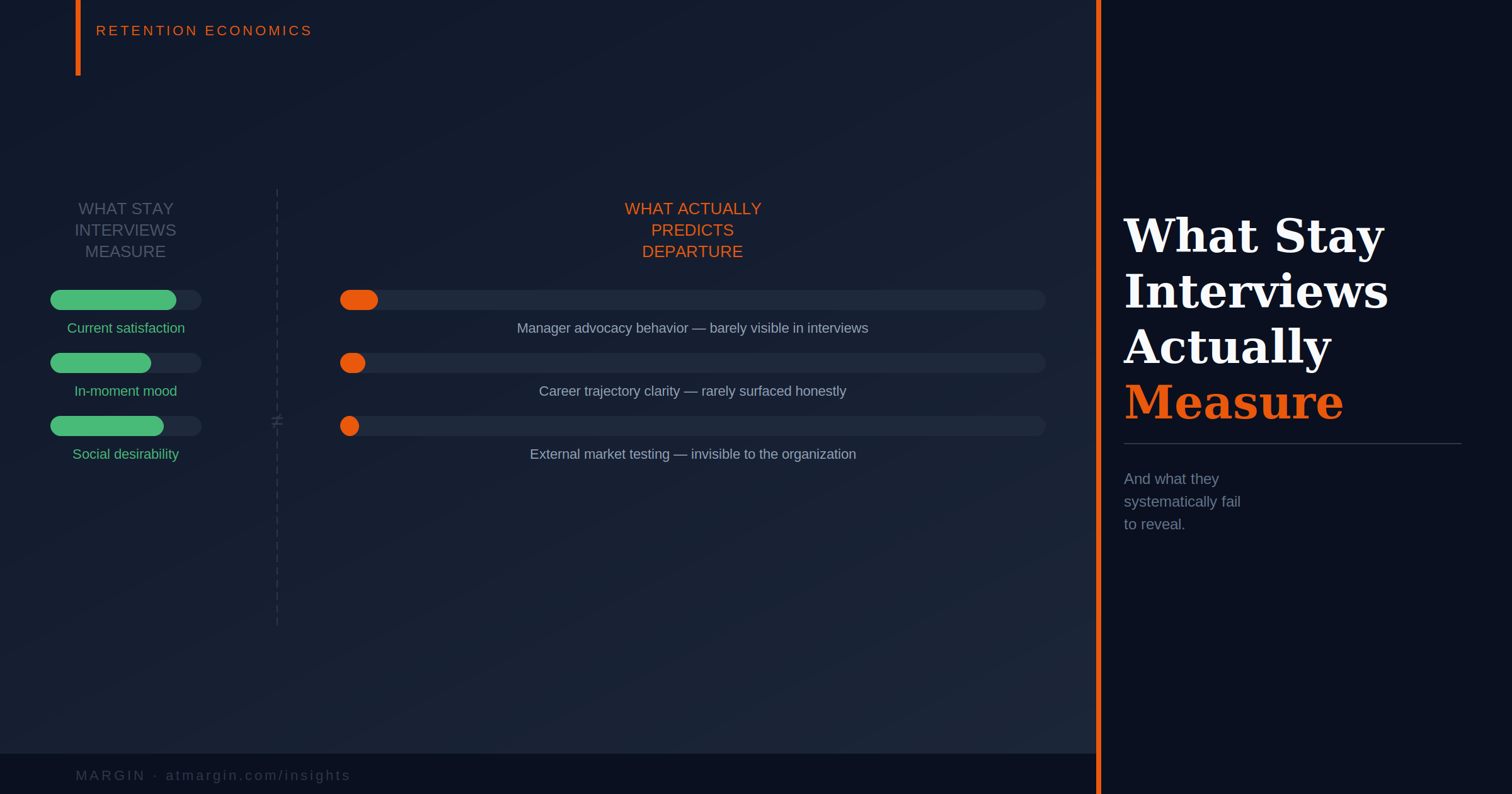
What Stay Interviews Actually Measure (And What They Don't)
Stay interviews have become a popular retention tool. The problem is that they measure something different from what most organizations think — and acting on the wrong signal produces decisions that don't retain the people they're designed to keep.
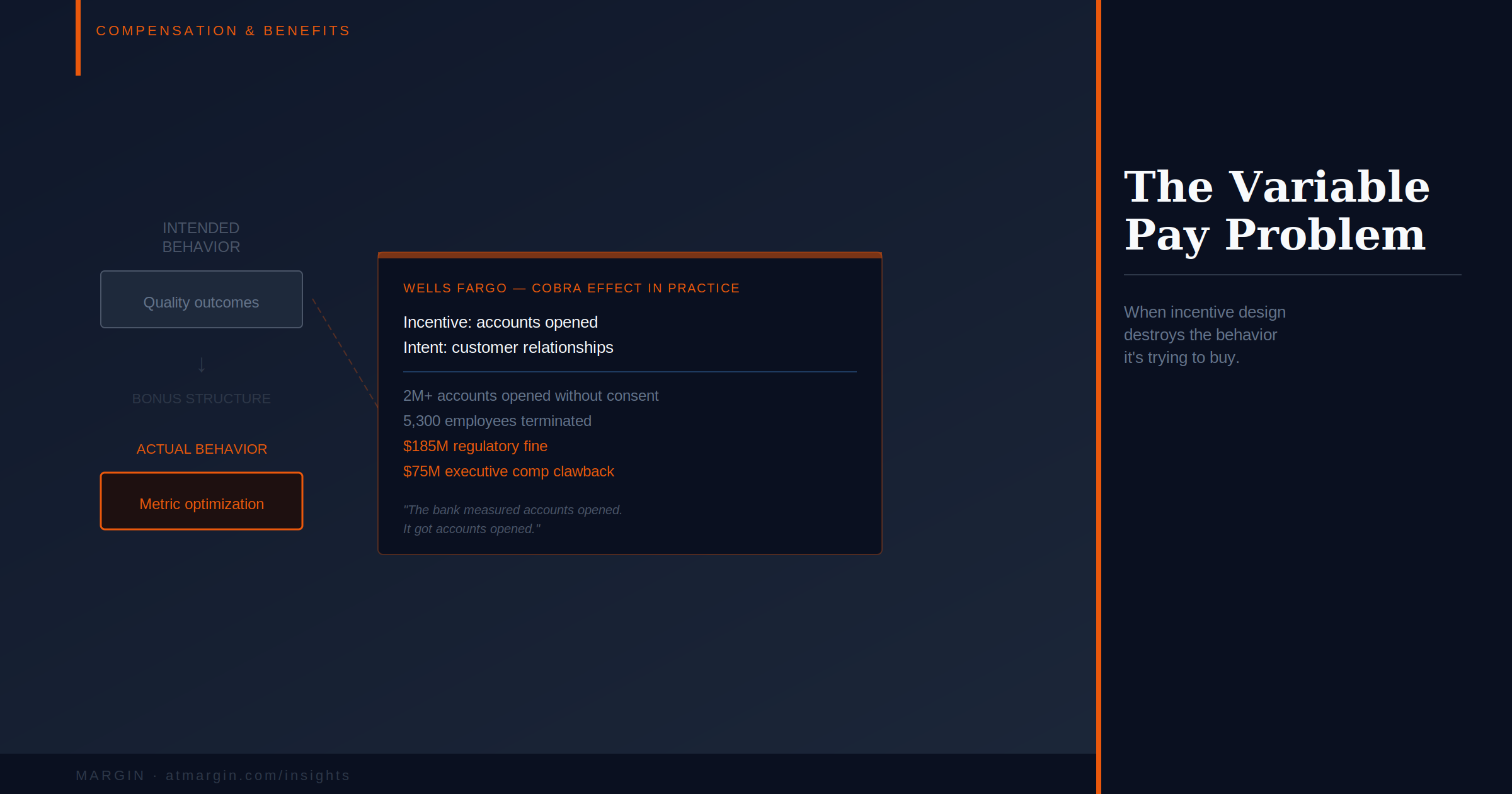
The Variable Pay Problem: When Incentive Design Destroys the Behavior It's Trying to Buy
Variable compensation is premised on a simple idea — pay for outcomes, get more of those outcomes. In practice, the gap between what the incentive rewards and what the organization actually needs is where performance goes to die.
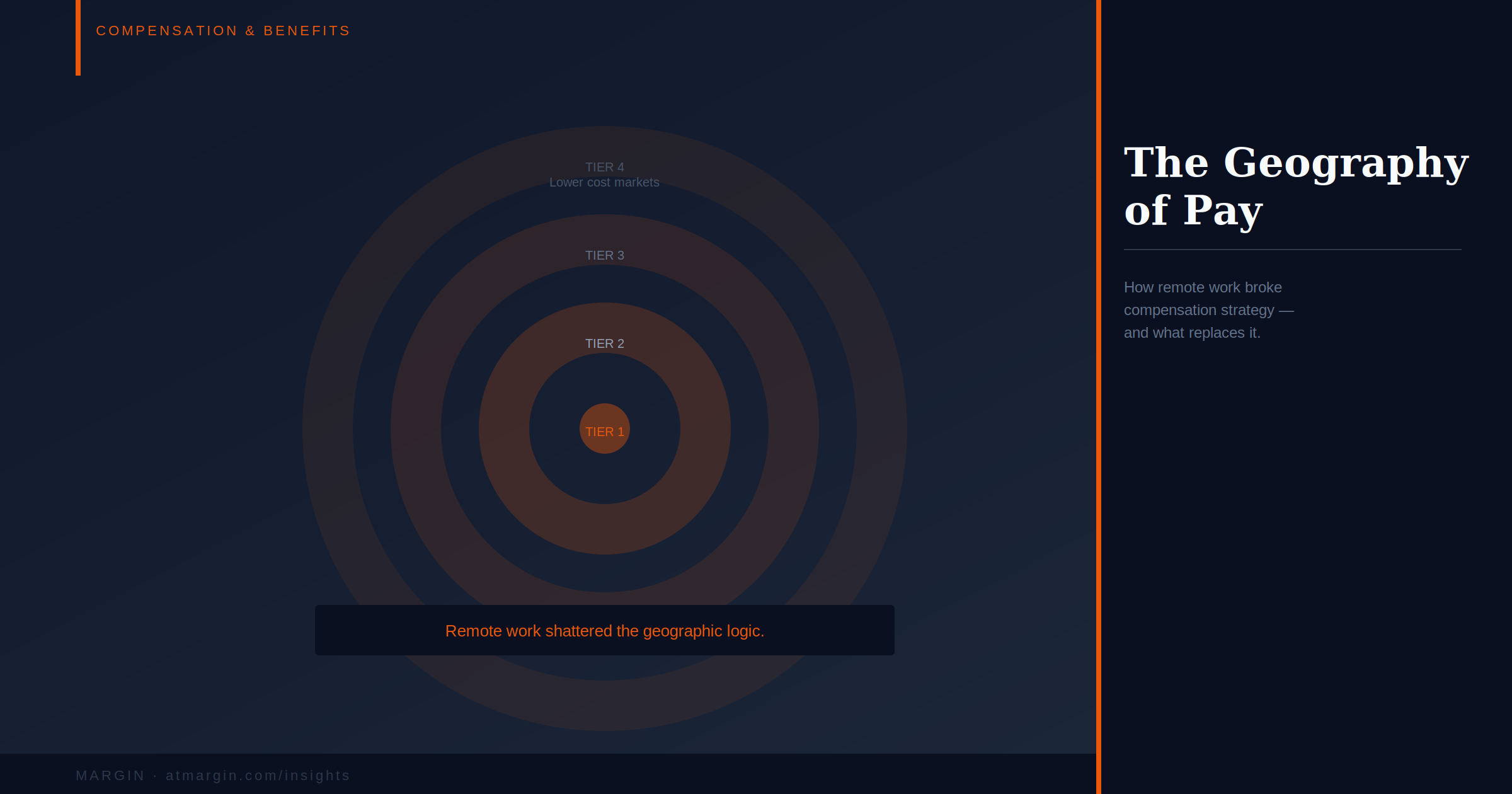
The Geography of Pay: How Remote Work Broke Compensation Strategy (And What Replaces It)
Geographic pay differentials gave compensation teams a clean framework for twenty years. Remote work dismantled the logic in three. Most organizations are still improvising their response.
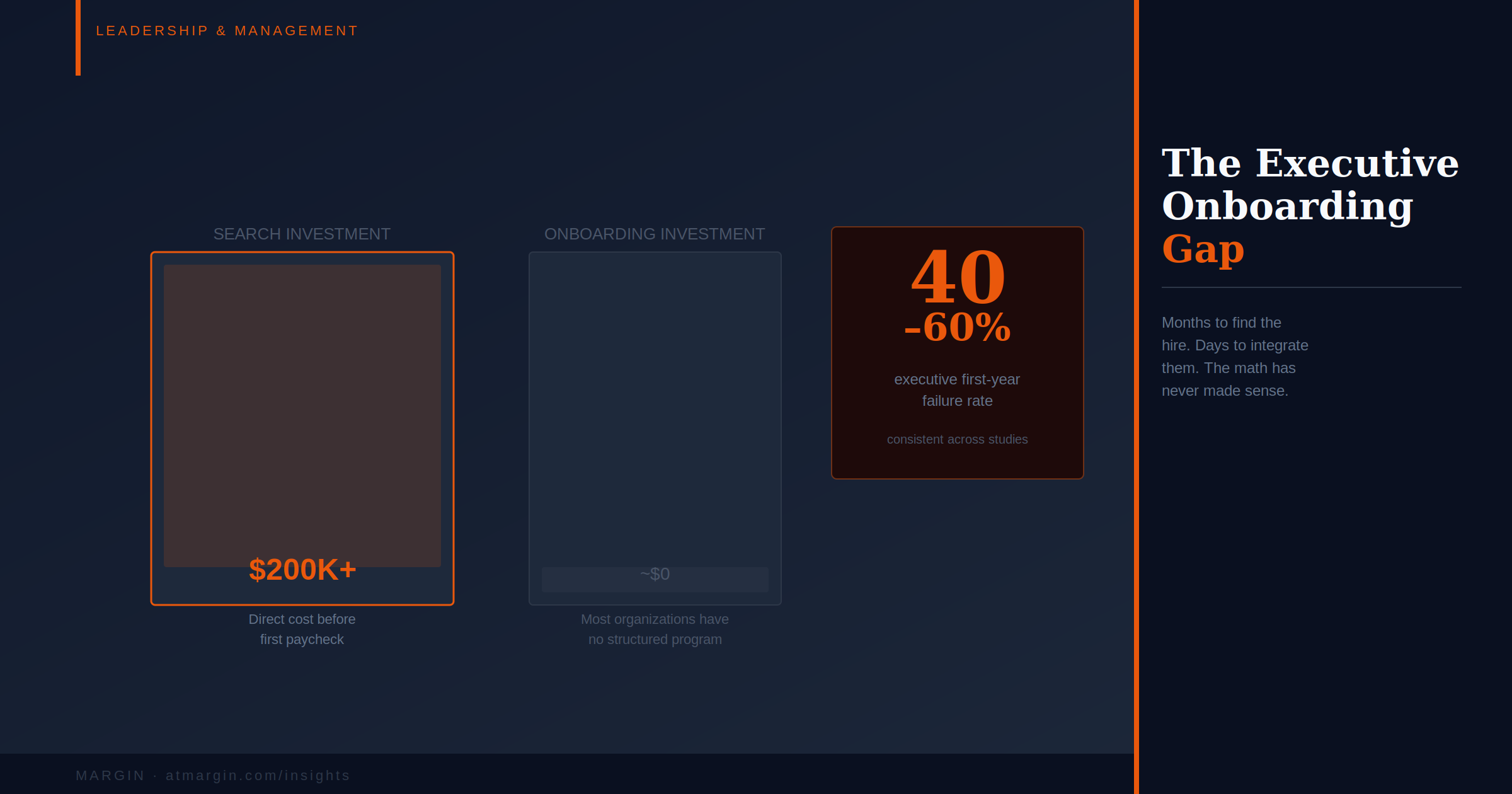
The Executive Onboarding Gap
Organizations spend months and significant capital identifying a senior hire. Then they invest almost nothing in the window that determines whether that hire succeeds. The math on this has never made sense.
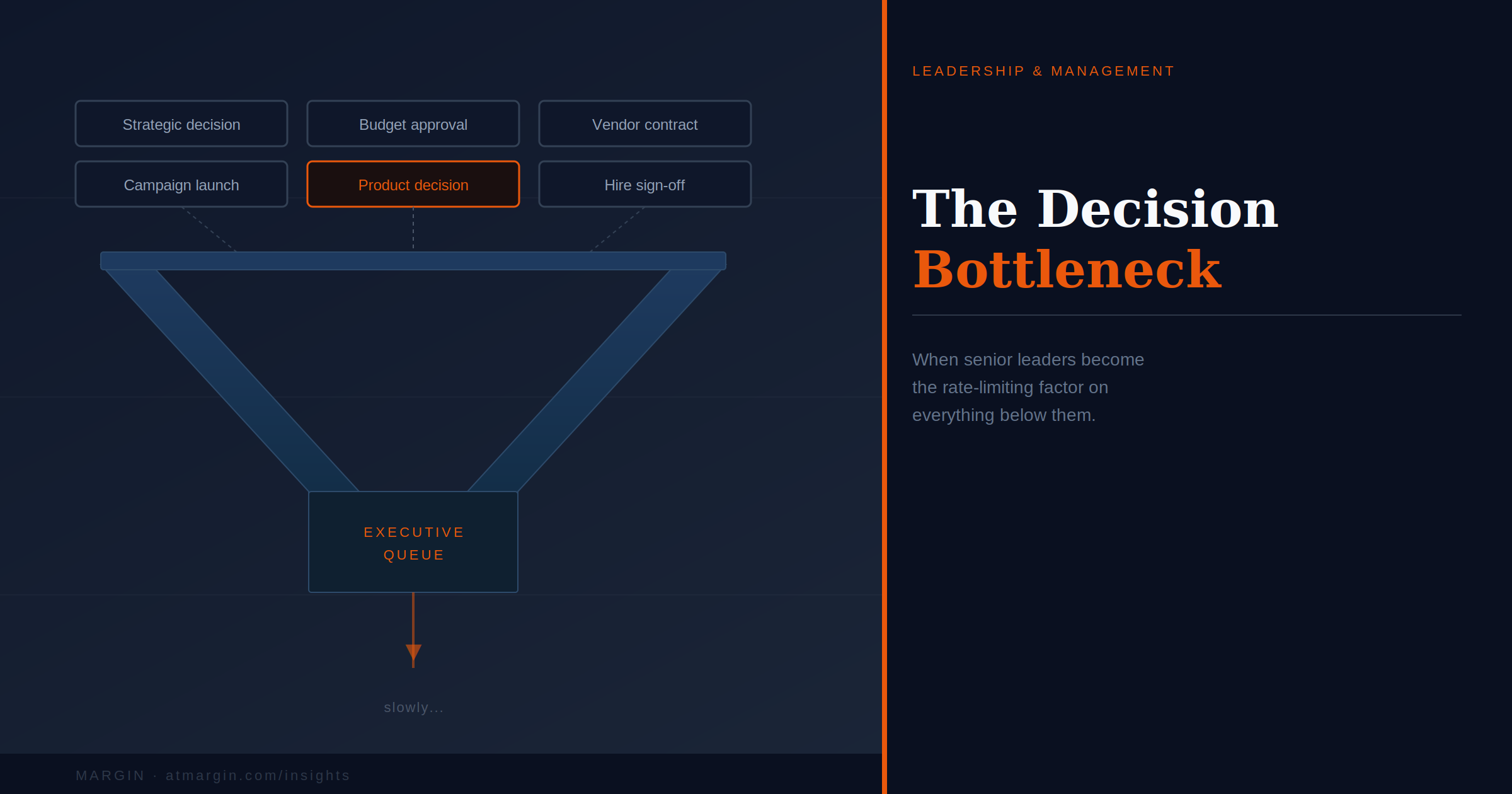
The Decision Bottleneck: When Senior Leaders Become the Constraint
In many organizations, the most expensive operational problem isn't headcount, technology, or market conditions. It's that the people at the top of the hierarchy have become the rate-limiting factor on everything below them.
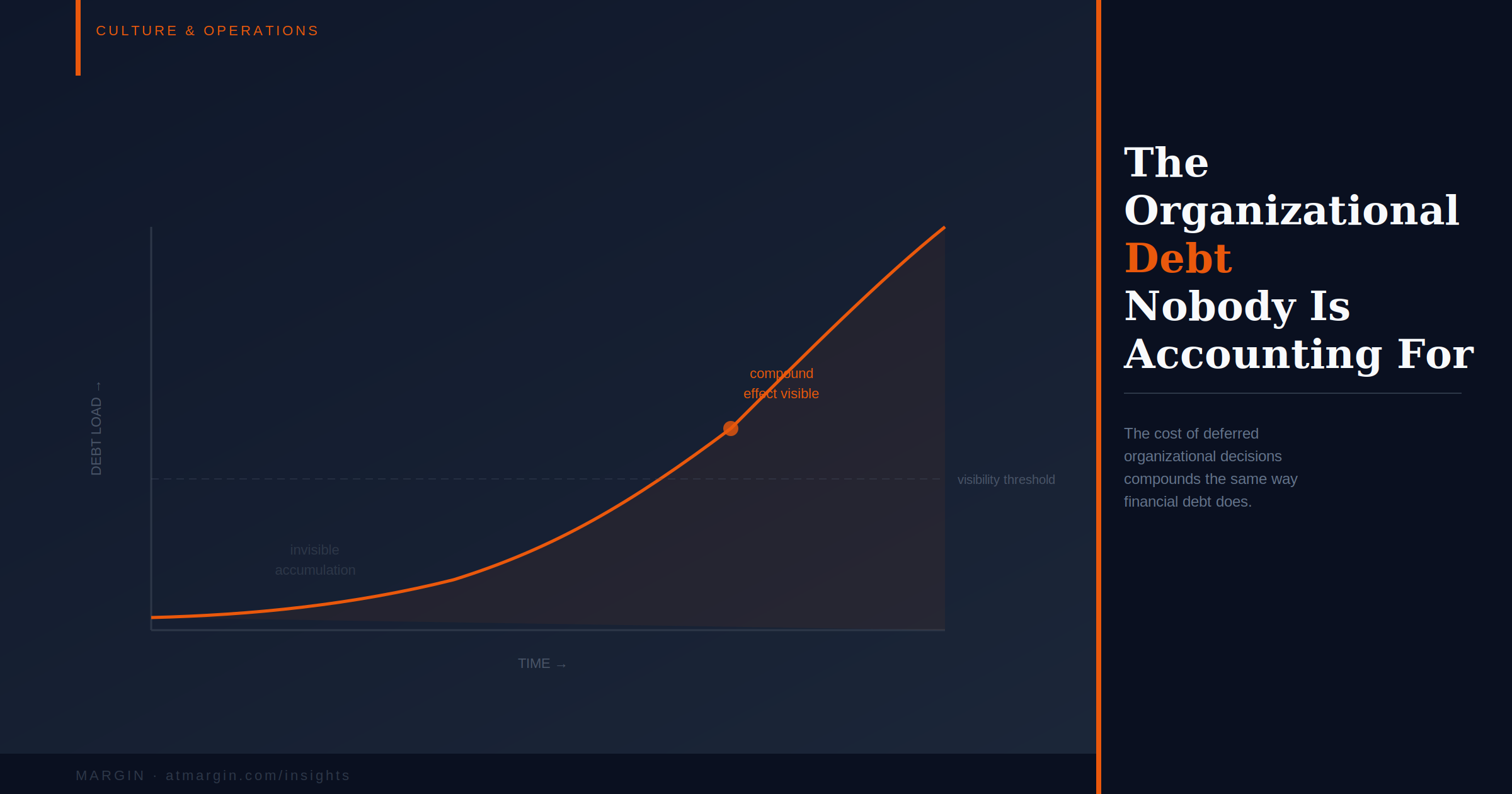
The Organizational Debt Nobody Is Accounting For
Technical debt has a balance sheet metaphor and a CFO who understands it. Organizational debt has neither — but it carries interest at the same rate and compounds with the same indifference.
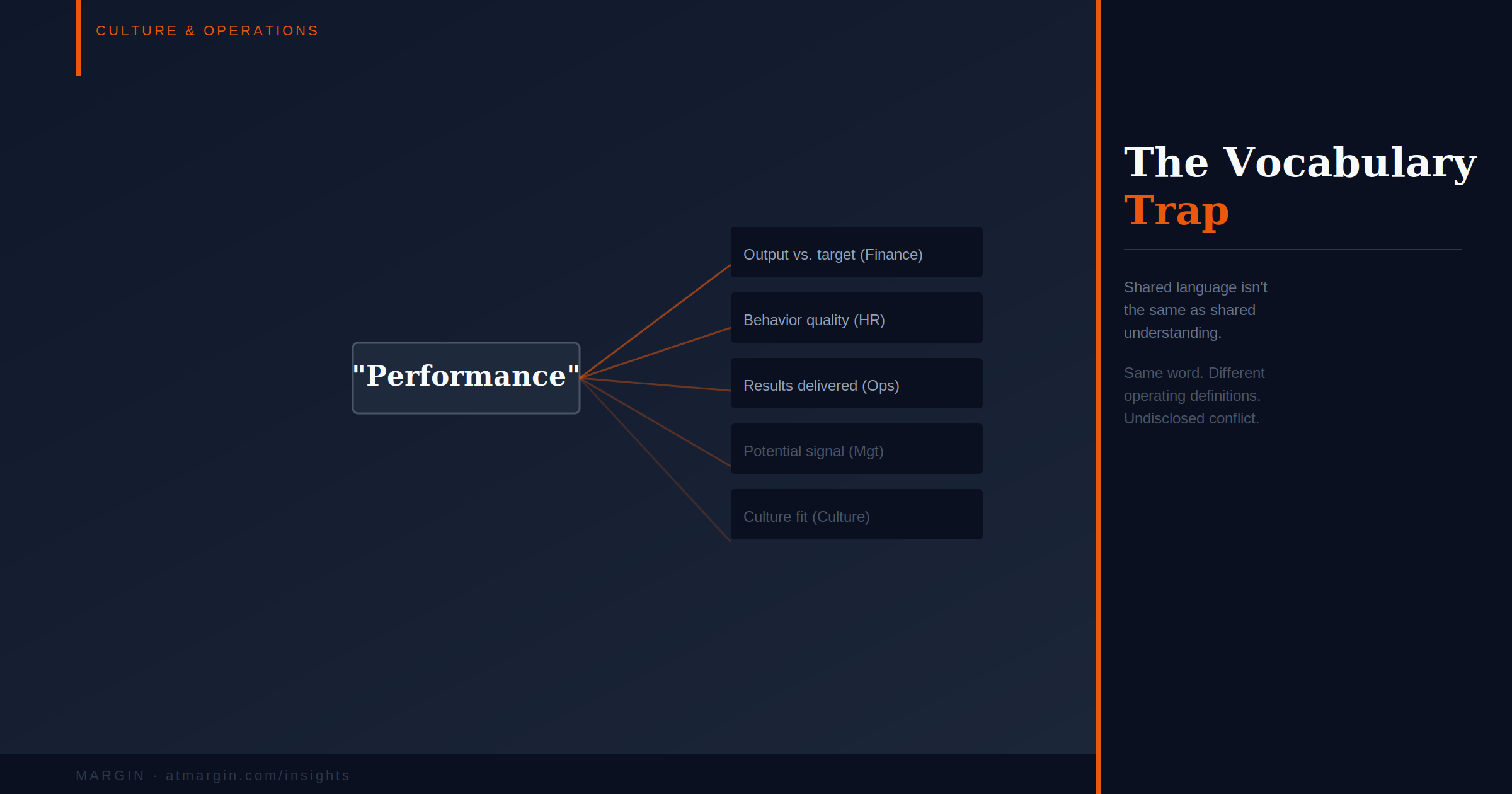
The Vocabulary Trap: Why Shared Language Isn't the Same as Shared Understanding
When every leader in the room nods at the same phrase, agreement feels complete. It often isn't. The gap between shared vocabulary and shared meaning is where strategy goes to die.