

Strategic insights on hiring, retention, compensation, leadership, and organizational design. Evidence-based analysis for executives who make decisions about people and teams.
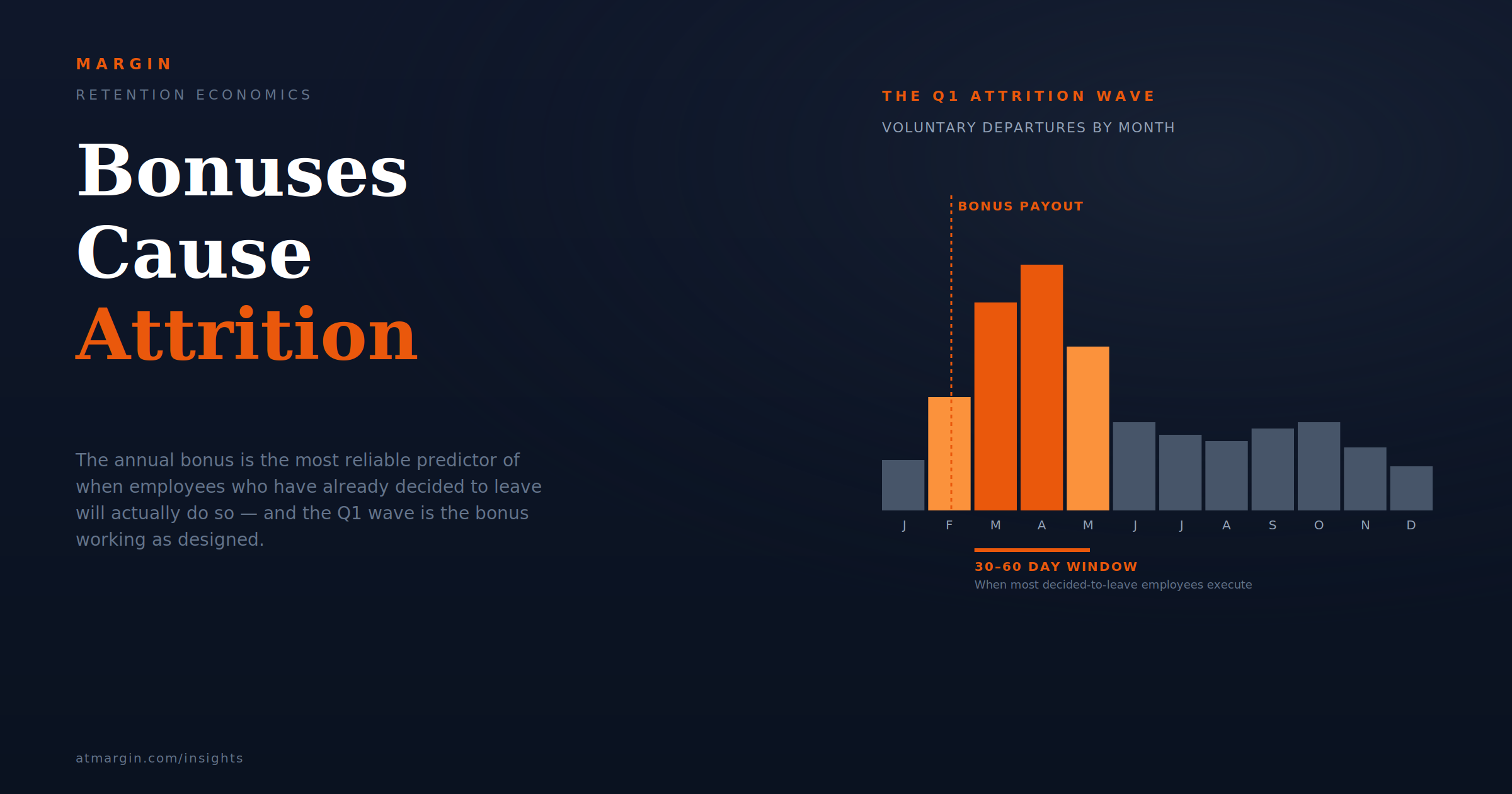
Bonuses Cause Attrition
The annual bonus is treated as a retention tool. In practice it is the most reliable predictor of when employees who have already decided to leave will actually do so — and the Q1 attrition wave is the bonus working exactly as designed.
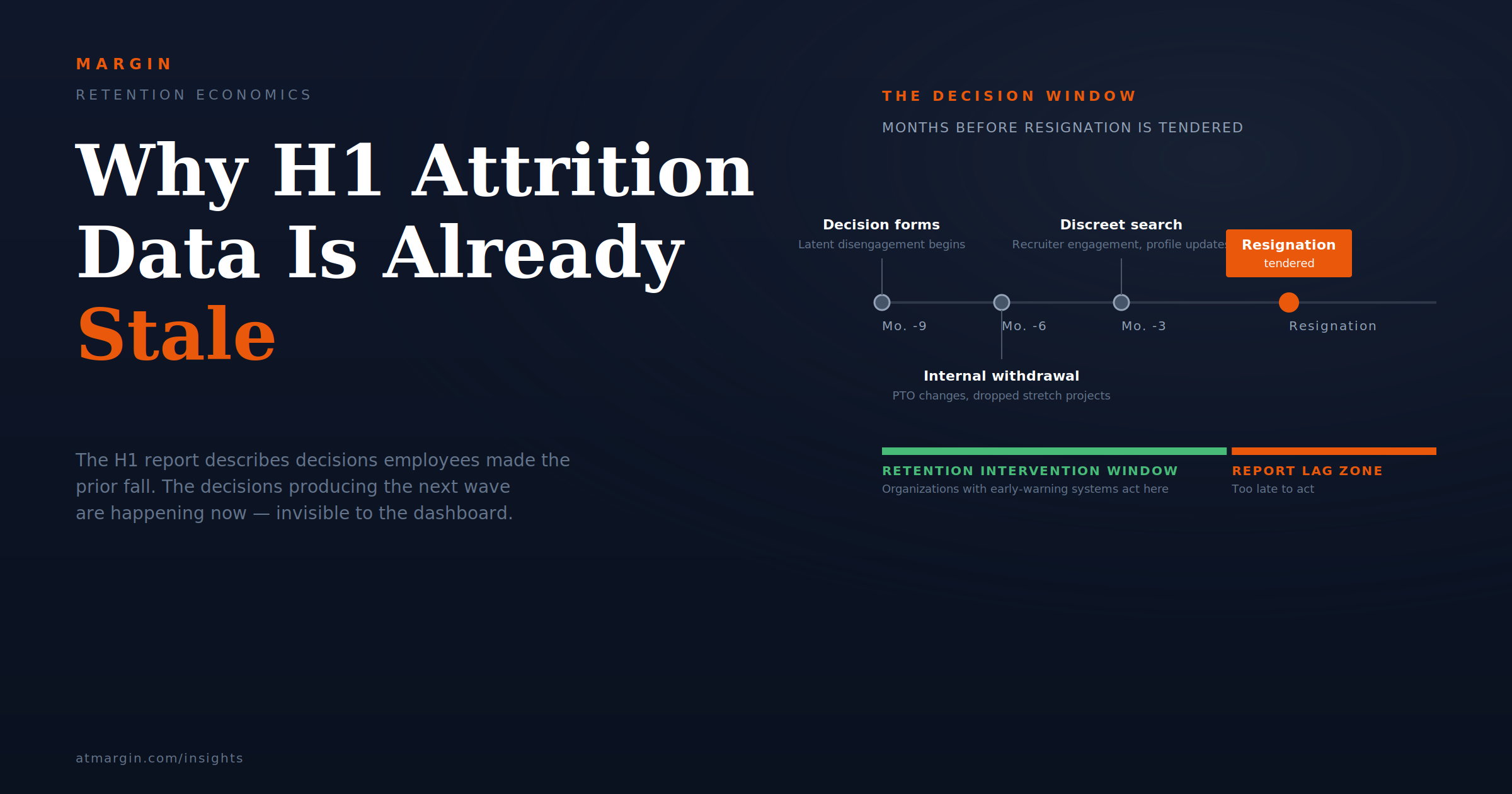
Why H1 Attrition Data Is Already Stale
The H1 attrition report on a CFO's desk in July describes decisions employees made the prior fall. The decisions producing the next wave of departures are happening now — and the data describing them is more than a year away.
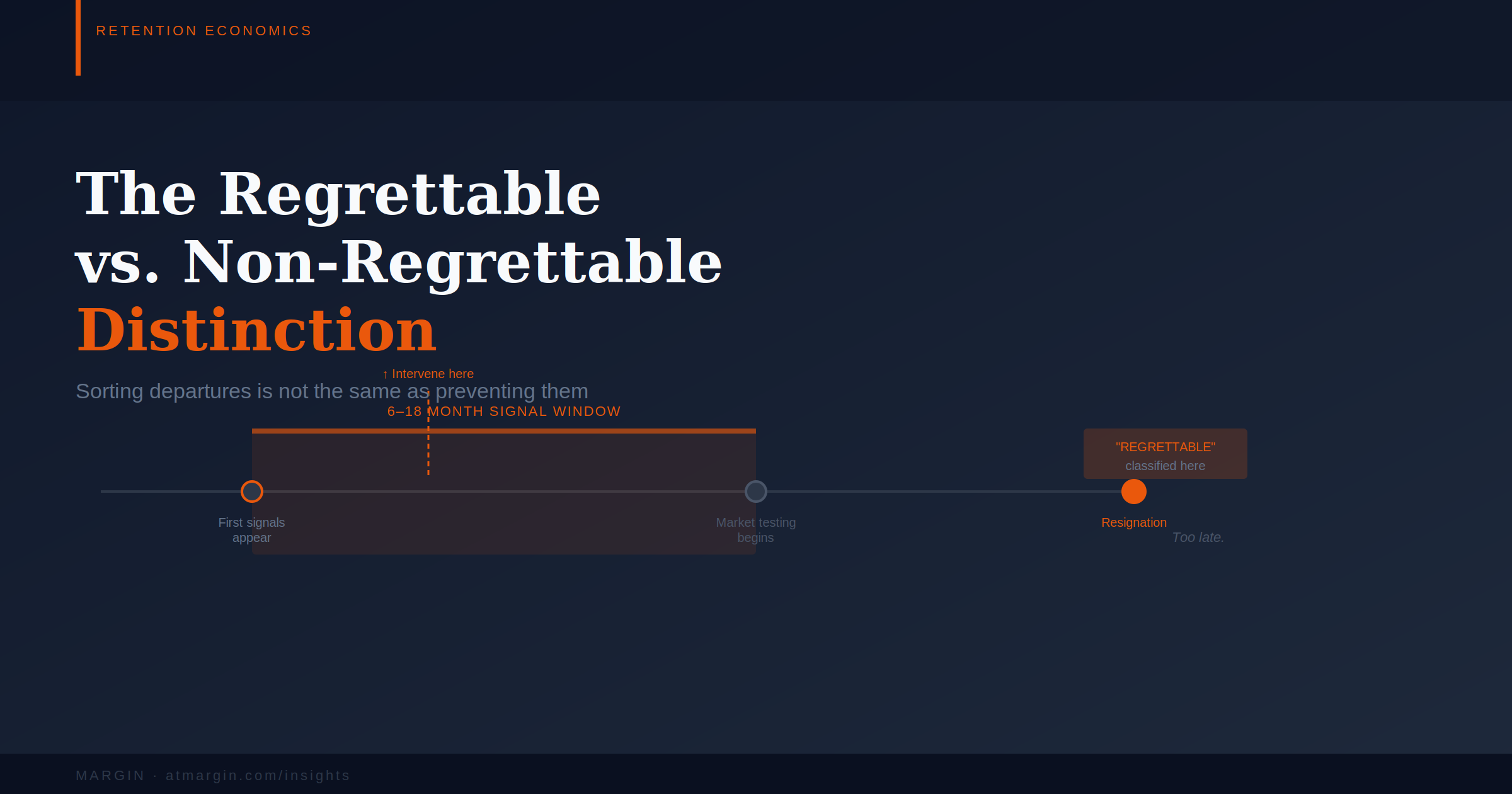
The Regrettable vs. Non-Regrettable Distinction Is Costing You
Sorting departures into regrettable and non-regrettable feels like analysis. It isn't. It's a retrospective judgment that arrives too late to be useful and too imprecise to be actionable.
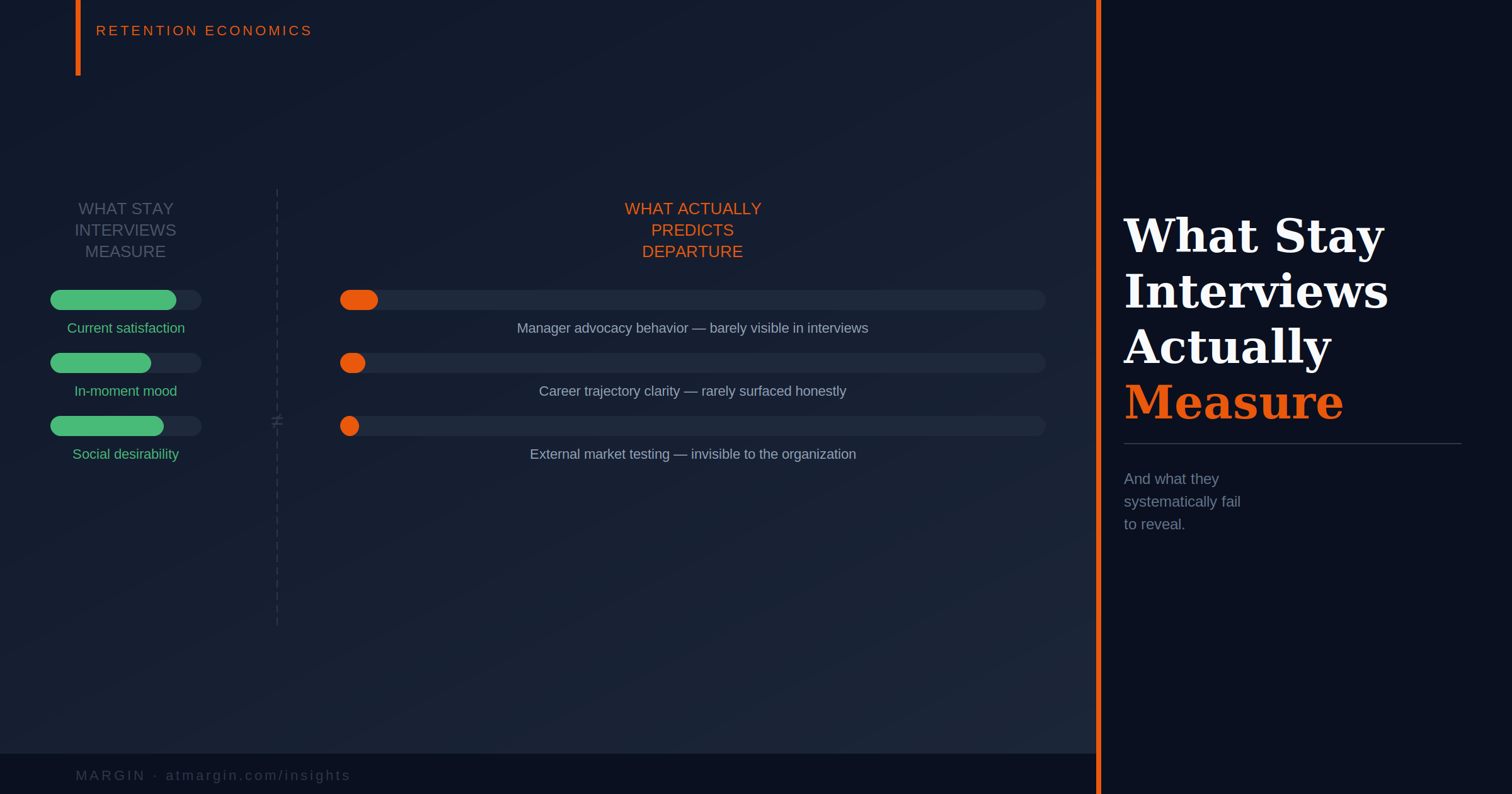
What Stay Interviews Actually Measure (And What They Don't)
Stay interviews have become a popular retention tool. The problem is that they measure something different from what most organizations think — and acting on the wrong signal produces decisions that don't retain the people they're designed to keep.
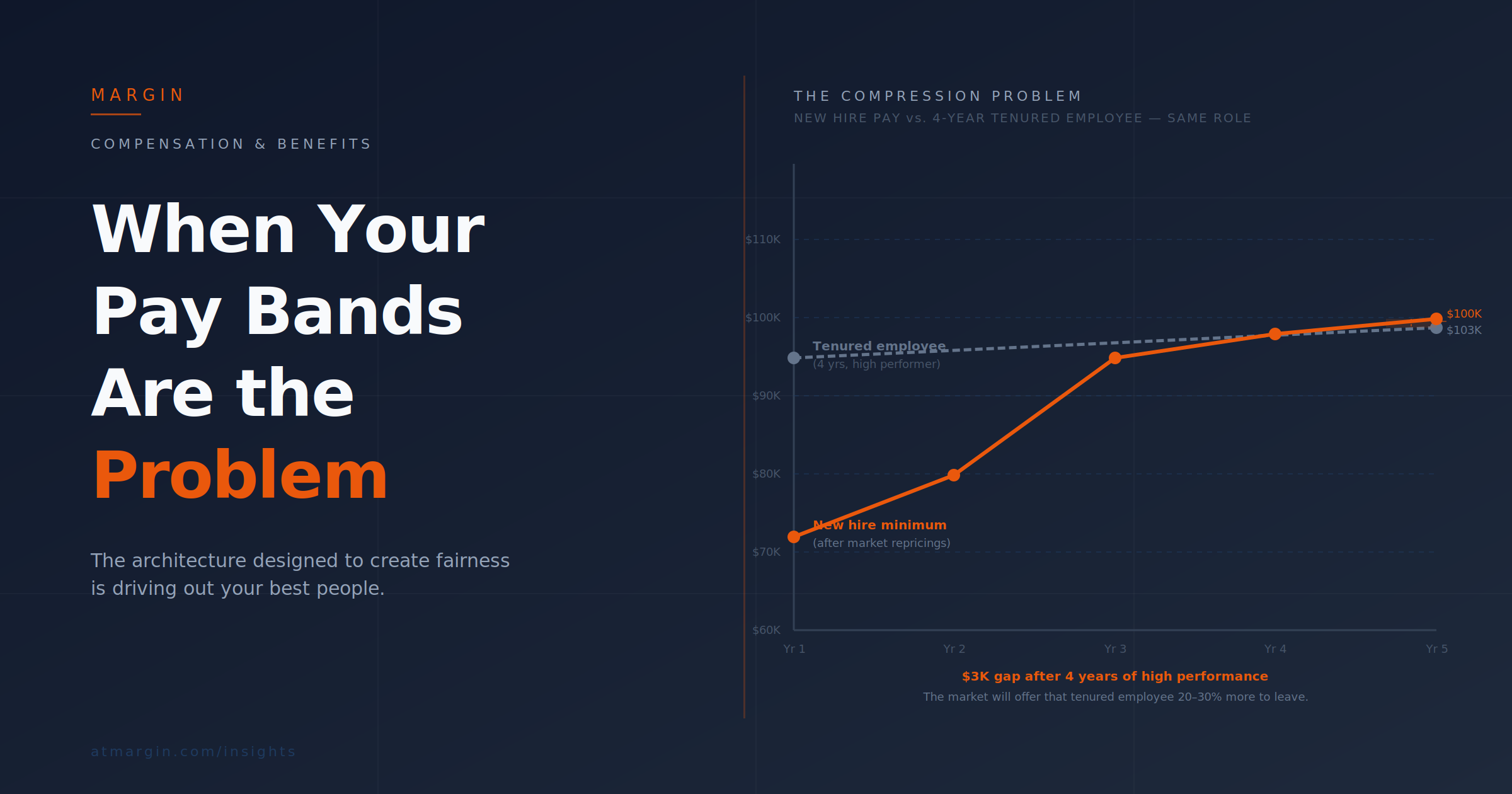
When Your Pay Bands Are the Problem
A compensation architecture that was designed to create fairness and cost control is, in many organizations, the primary mechanism driving turnover in the roles most expensive to replace.
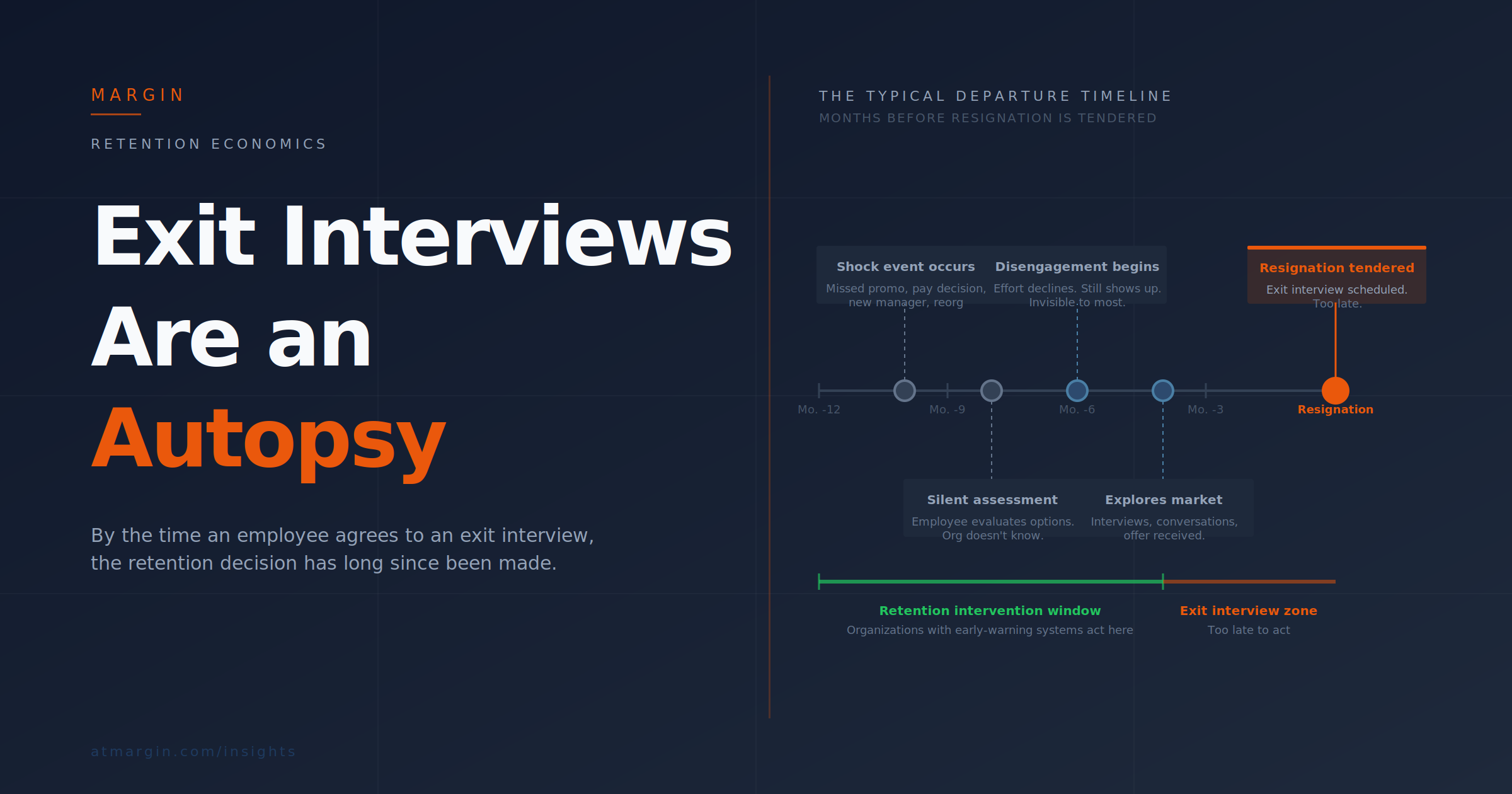
Exit Interviews Are an Autopsy
By the time an employee agrees to an exit interview, the retention decision has long since been made. The organizations winning on retention aren't studying departures; they're predicting them.
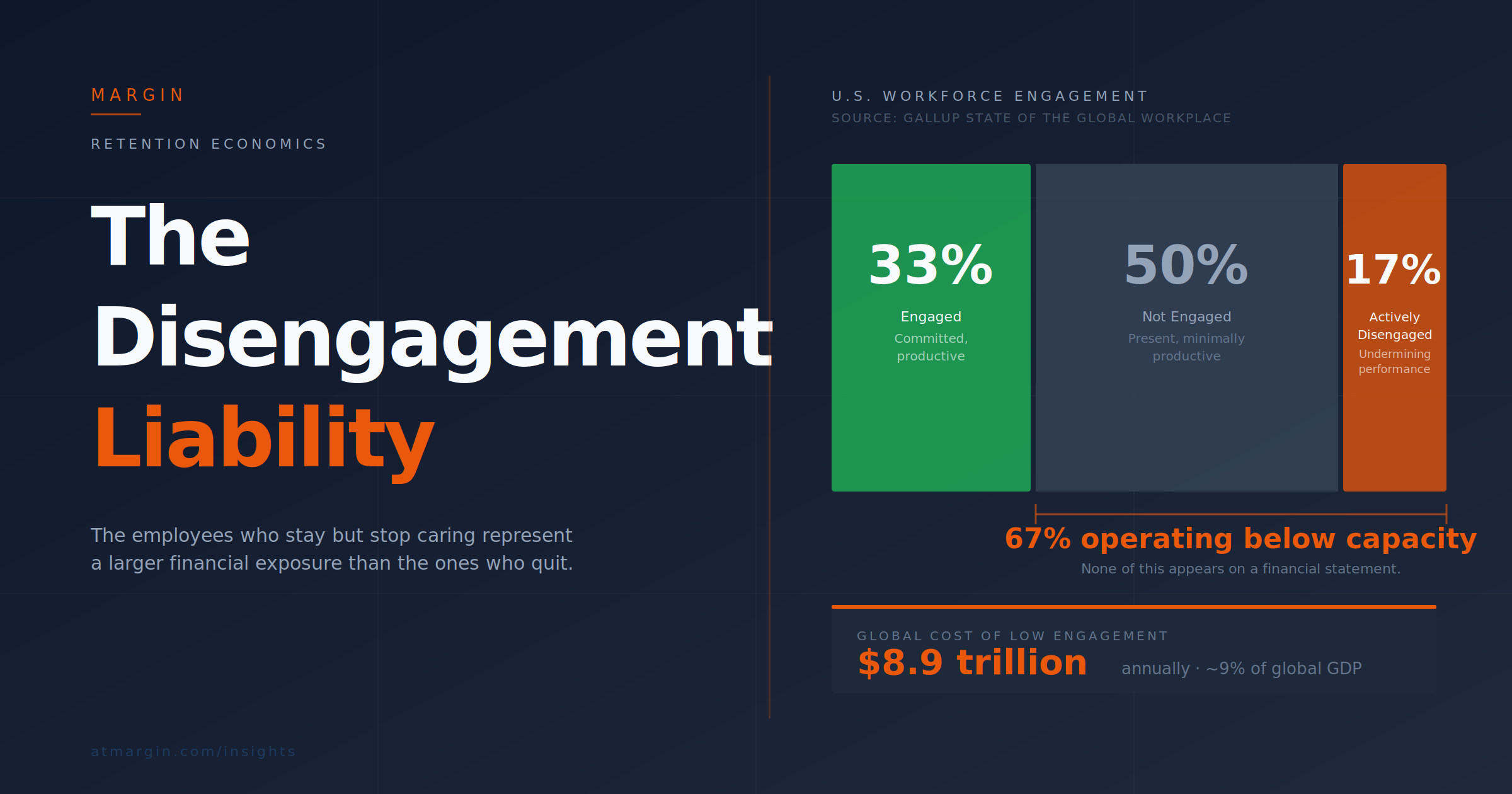
The Disengagement Liability
The employees who stay but stop caring represent a larger financial exposure than the ones who quit, and it doesn't appear anywhere on your balance sheet.
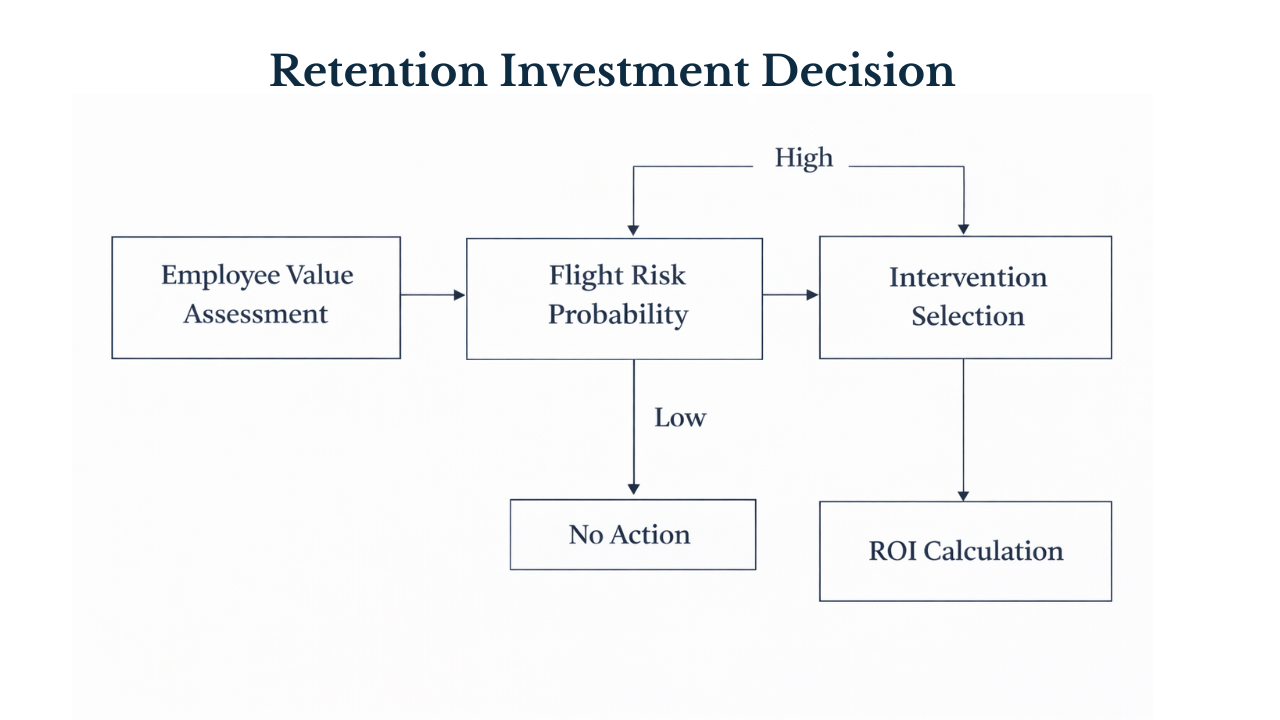
Retention Strategies That Actually Work: An Evidence-Based Framework
Abandon retention theater. Focus on manager quality, career development, and segmented strategies that generate measurable returns on retention investment.
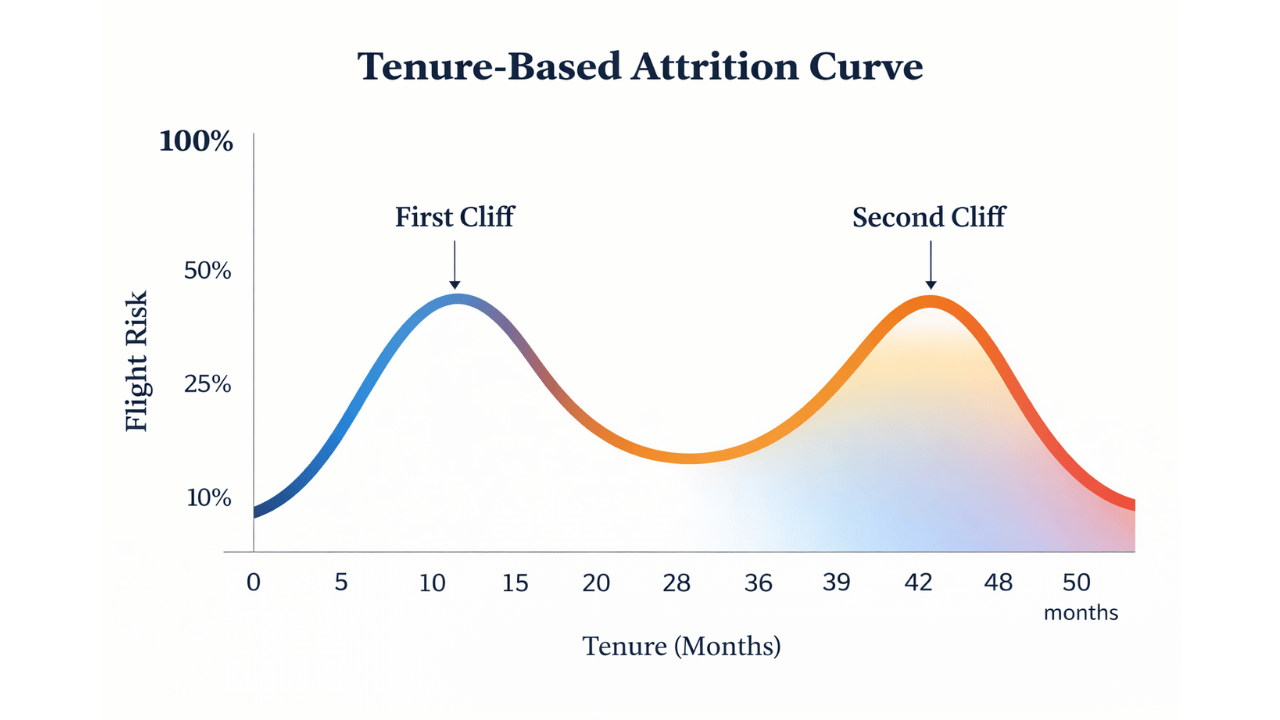
Career Development and the 18-Month Cliff
You invest twelve to eighteen months developing an employee. They reach full productivity. Then they leave because they cannot see year three. You've funded their training for their next employer.
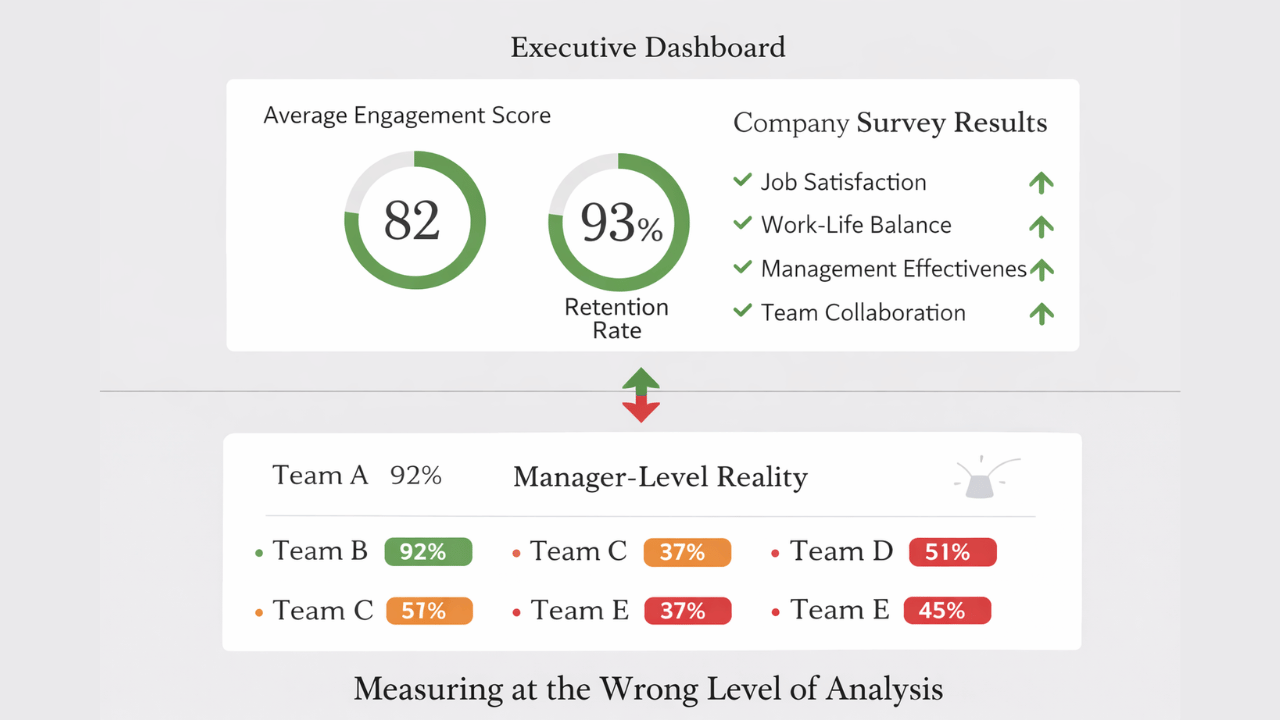
The Manager Quality Paradox: Why Your Best Employees Leave Your Worst Managers
The economics are perverse. Your best employees, who have the most employment options, leave bad managers first. Your worst employees, with fewer alternatives, stay.

The Half-Life of Salary Increases: Why Your Retention Bonuses Don't Work
You're not solving retention; you're teaching employees to hold you hostage.
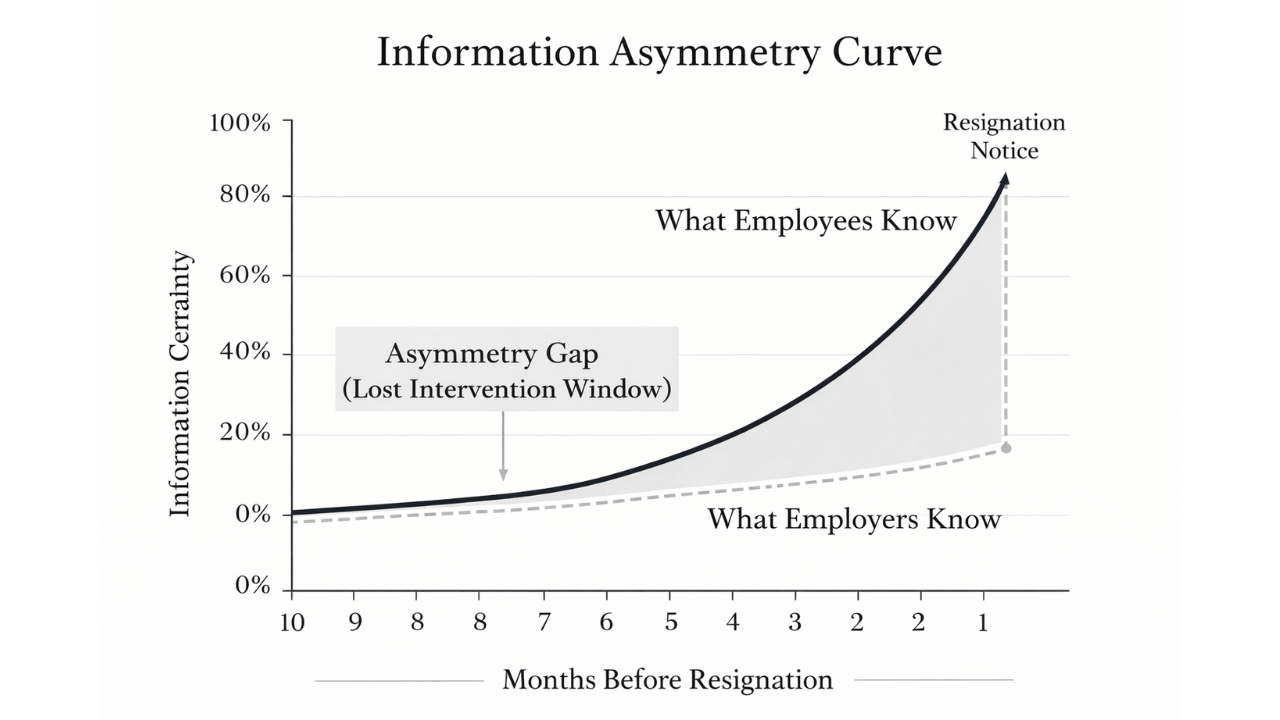
Why Your Best People Quit: Information Asymmetry in Retention Strategy
This information gap makes most retention efforts reactive theater rather than preventive strategy.

The Economics of Employee Turnover: What CFOs Get Wrong
Your finance team calculates employee turnover at 50-75% of annual salary. They're wrong by at least half.