

Strategic insights on hiring, retention, compensation, leadership, and organizational design. Evidence-based analysis for executives who make decisions about people and teams.
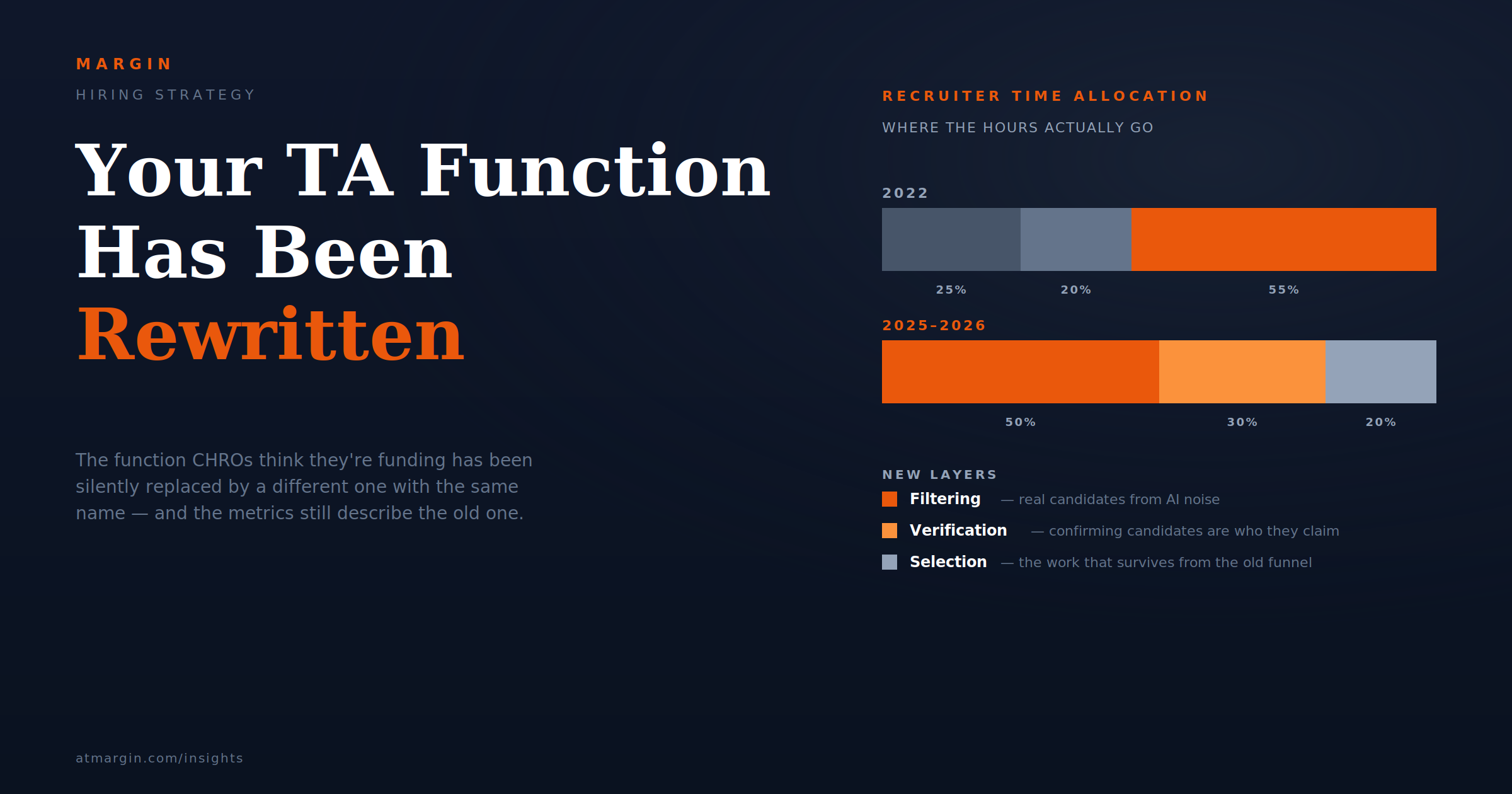
Your TA Function Has Been Rewritten
The TA function CHROs and CFOs think they are funding has been silently replaced by a different function with the same name. The metrics, budgets, and KPI architecture still describe the old one — and the team running the new one is being measured against work that no longer exists.
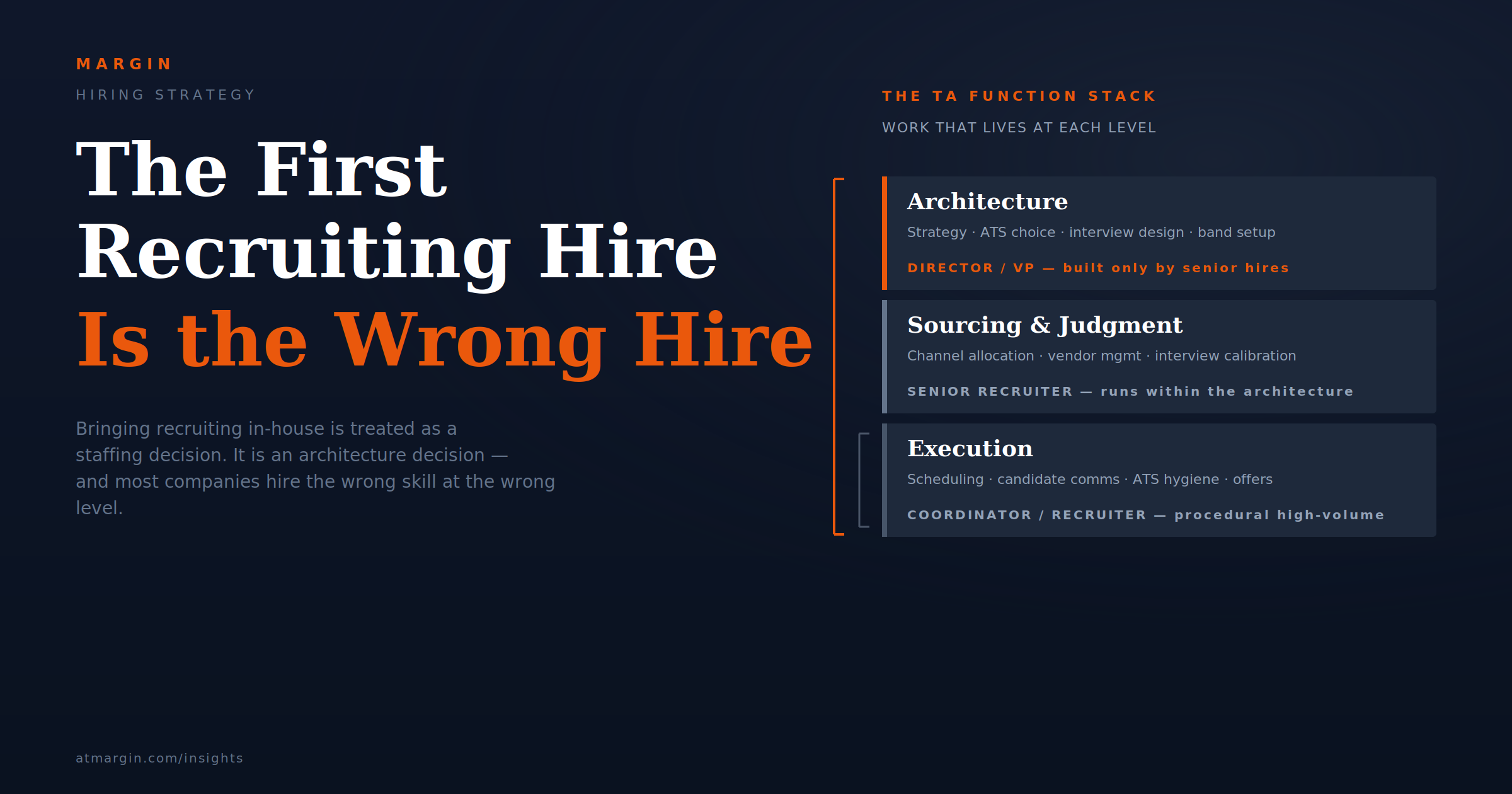
The First Recruiting Hire Is the Wrong Hire
Bringing recruiting in-house gets treated as a staffing decision when it is an architecture decision. The first hire is almost always wrong, and the rebuild eighteen months later is the cost most companies absorb without ever connecting it to the original error.
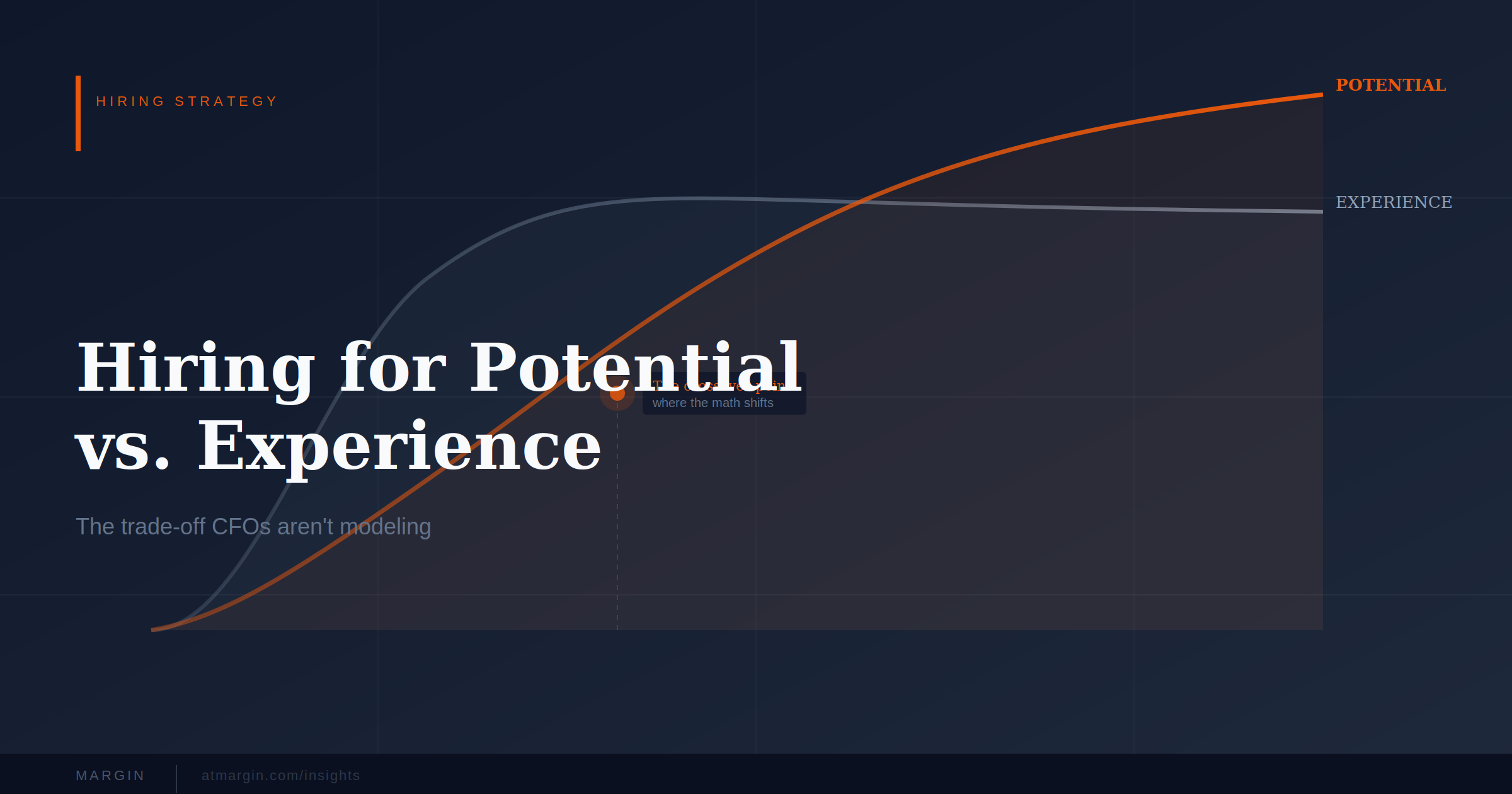
Hiring for Potential vs. Experience: The Trade-off CFOs Aren't Modeling
Defaulting to experience as a proxy for future performance feels rigorous. The data suggests it often isn't — and the cost of that assumption compounds quietly across every senior hire.
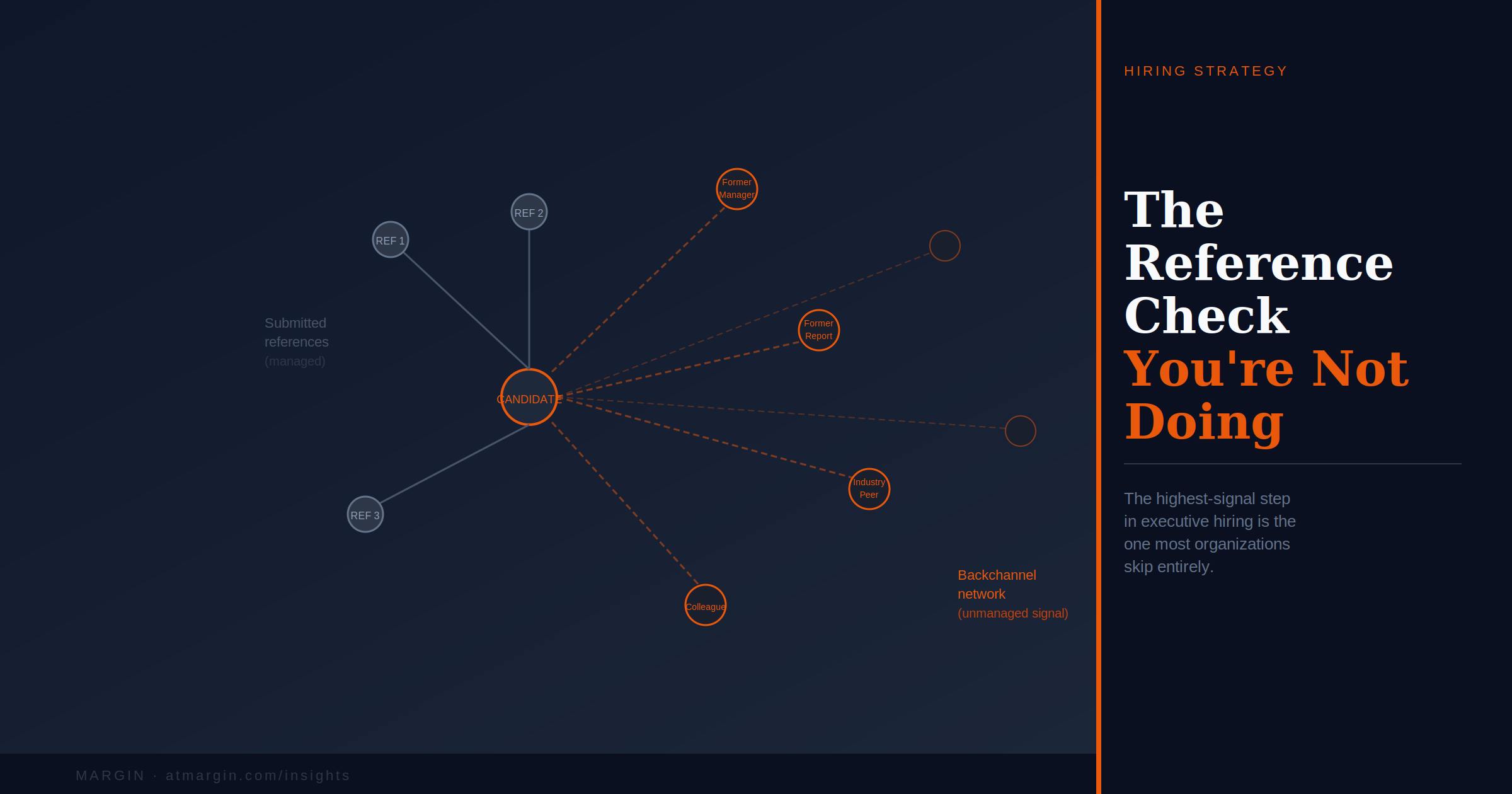
The Reference Check You're Not Doing
The references a candidate submits tell you what they want you to know. The ones they don't submit tell you what you need to know.
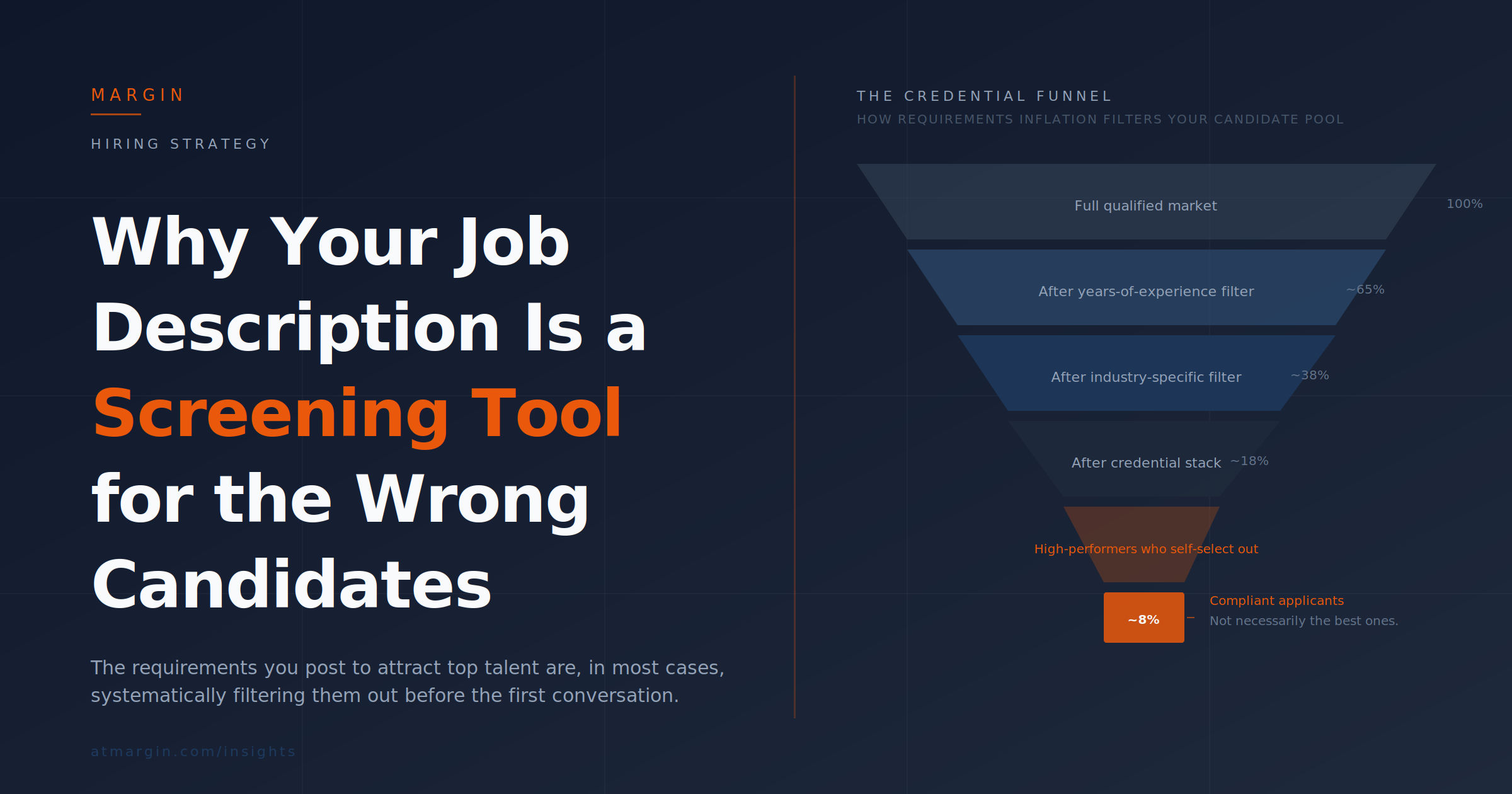
Why Your Job Description Is a Screening Tool for the Wrong Candidates
The requirements you post to attract top talent are, in most cases, systematically filtering them out before the first conversation.
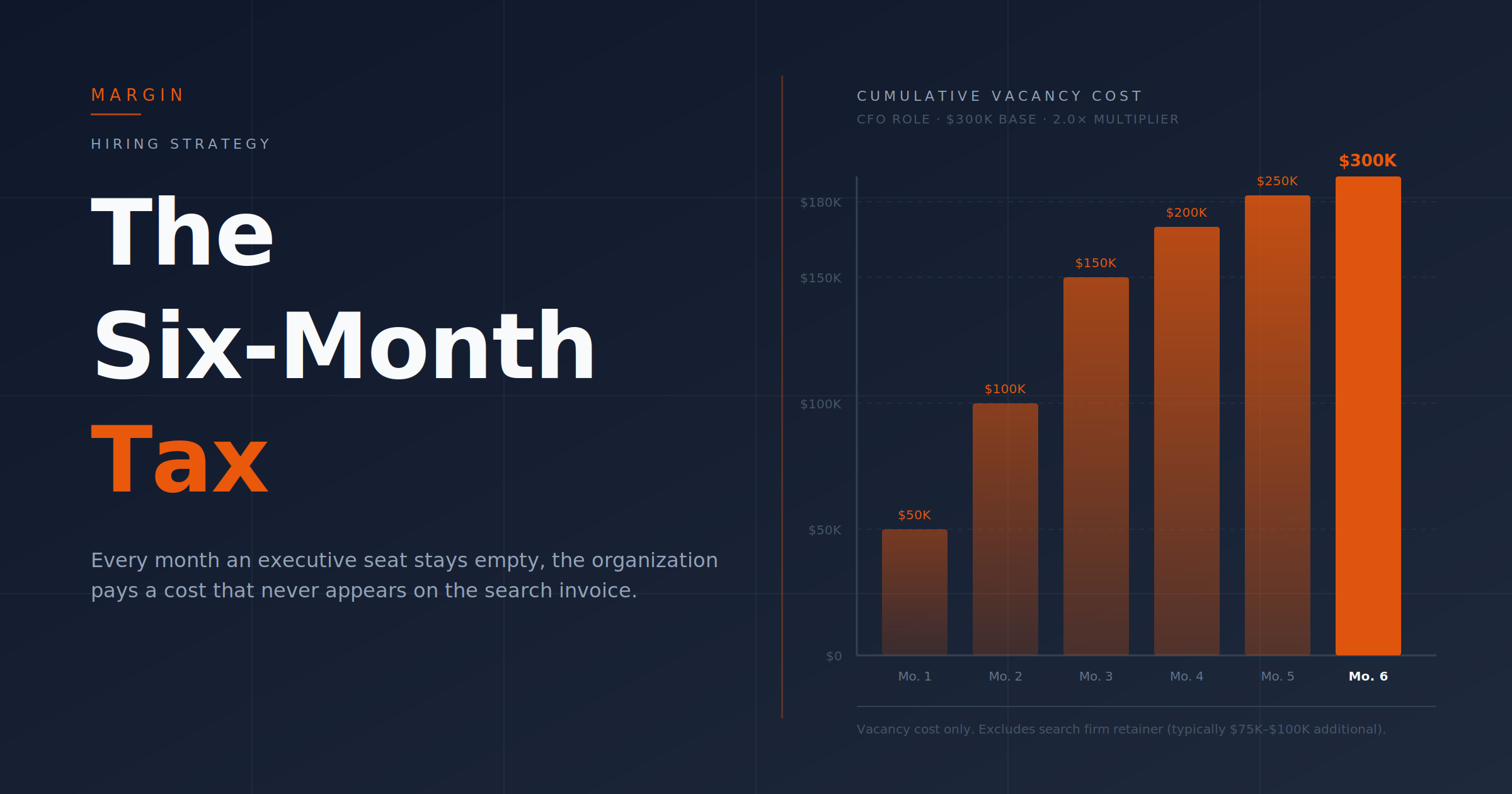
The Six-Month Tax
Every month an executive seat stays empty, the organization is paying a cost that never appears on the search invoice — and most companies have no idea how large it is.

Compensation Strategy for Growth: Scaling Without Breaking Your Budget
CFOs: Poor compensation scaling costs you $22.5M annually and hundreds of millions in enterprise value. Grow 4x headcount without destroying margins.

Pay Transparency: The Trade-offs Companies Don't Discuss
Pay transparency reduces pay gaps but exposes problems you can't ignore. Audit compensation, fix inequities, then go transparent—not the reverse. Here's how.
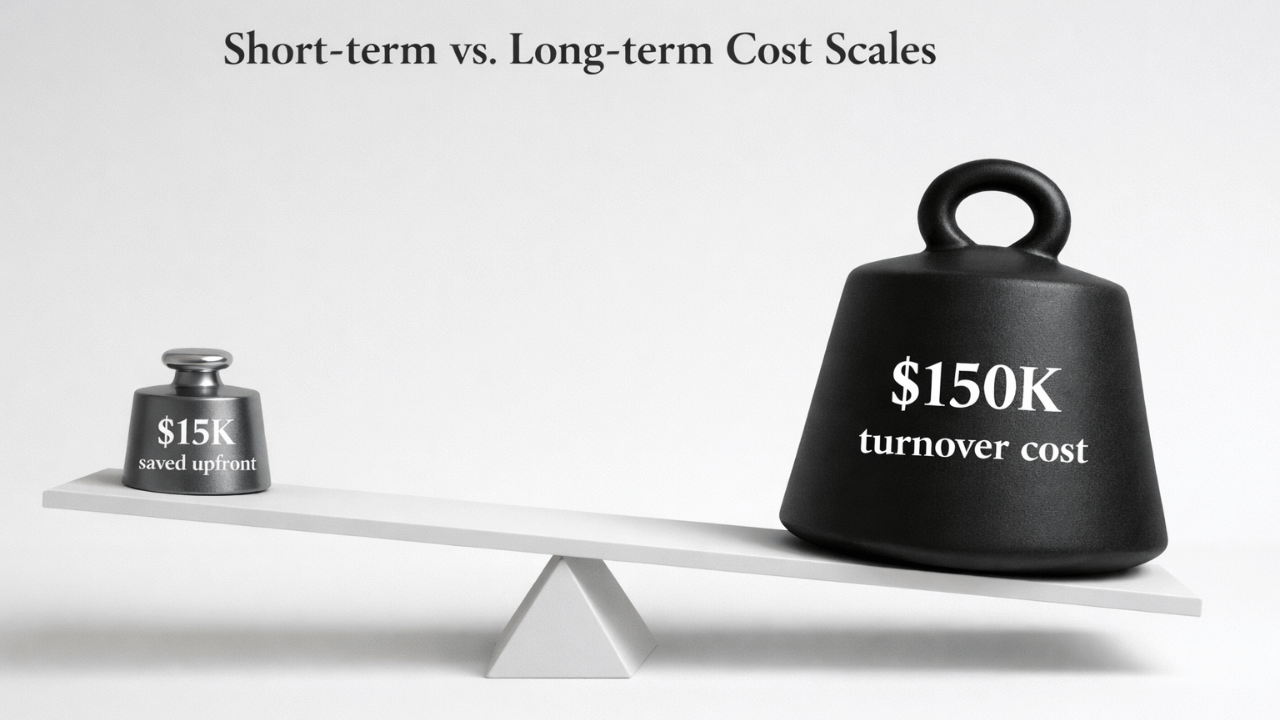
The Negotiation Paradox: Why Starting Low Costs You More Than Starting Fair
The negotiation paradox: Lowballing saves $15K upfront but costs $150K in early turnover and replacement. Fair initial offers reduce total compensation cost.

Total Rewards: Why Cash Isn't King (Even Though Everyone Acts Like It Is)
CFOs: You're overpaying on salary, underinvesting in benefits. Total rewards optimization—equity, flexibility, development—wins talent at lower cash cost.

Pay Bands vs. Market Pricing: When Structure Helps (and When It Hurts)
Your pay bands lag market by 12+ months, costing you talent. But market pricing creates 20-30% variance within roles. Here's when to use structure vs. flexibility.

Compensation Philosophy: The Framework Companies Skip (Then Regret It)
CFOs: Reactive compensation decisions cost 10-20% more than strategic philosophy. Learn the 5 questions that prevent pay inequity and budget collapse.

Salary Benchmarking Mistakes That Cost You Top Talent
Using Glassdoor and Payscale for offers? You're likely underpaying by 10-15%, losing your best candidates. Discover what actually determines real market rates.

Why Job Requirements Are Economic Fiction
Inflated requirements don't just filter candidates; they shrink your qualified pool below the threshold needed for efficient hiring.

The Economics of Lowball Offers: Why Saving 10% Costs You 100%
Here's why the math works against you, and when (rarely) it doesn't.

Speed vs. Quality: The Hidden Costs of Fast Hiring
Time-to-fill matters, but time-to-productivity matters more. Cost-per-hire matters, but quality-of-hire matters more. Vacancy costs are real, but mediocrity costs are larger.

Information Asymmetry in Interviews: Why Candidates Know More Than You Do
Your interview process reveals what candidates want you to know. The real question is: what are you doing to learn what they don't?

The Screening Bottleneck: Why More Applications Mean Worse Hires
Your open position just received its 500th application. Congratulations. You now have a problem that looks like success but performs like failure.

The True Cost of a Bad Hire: A Framework for Hiring ROI
This accounting is worse than incomplete. It's dangerously misleading. And once you understand the mathematics of hiring failure, you can't look at your hiring process the same way again.