
Founder Mode vs. Manager Mode: When Leadership Style Must Change
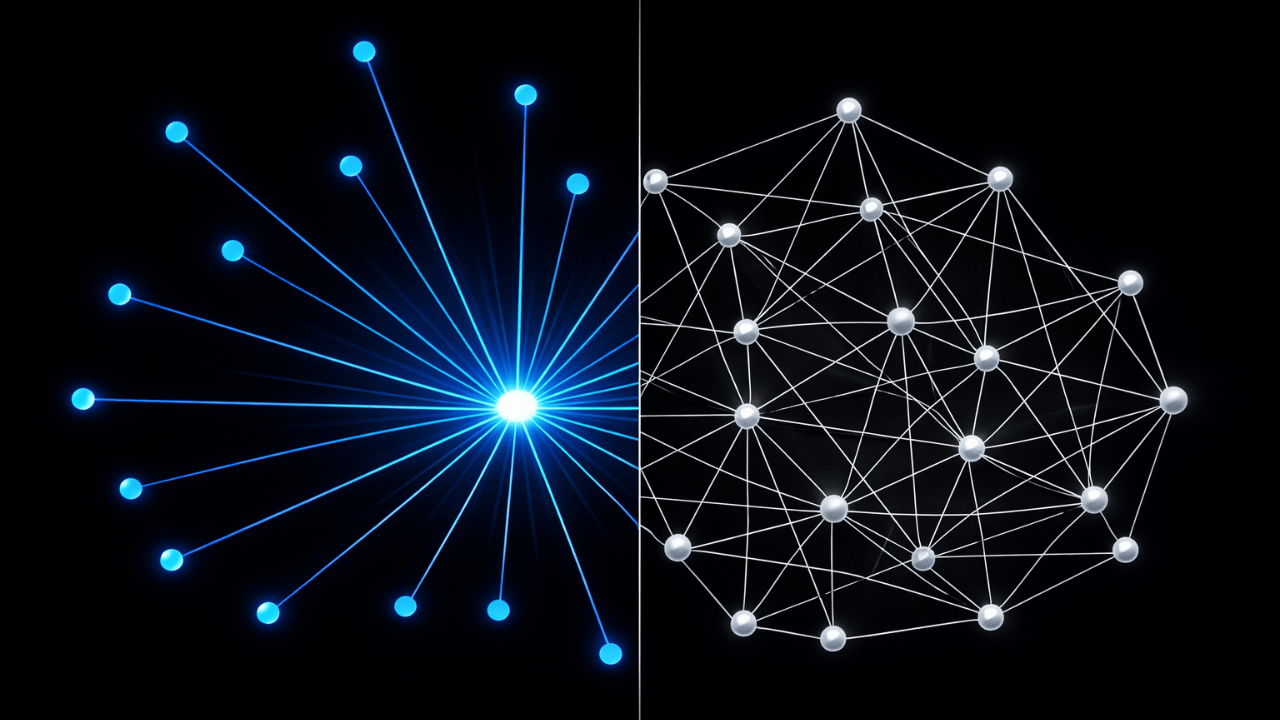
Your founder CEO is killing the company she built.
At twenty employees, her hands-on involvement in everything was the competitive advantage. She personally reviewed every product decision, knew every customer, approved every hire, and made decisions in hours that would take competitors weeks. The company moved fast, shipped quickly, and won deals through agility and founder vision.
At two hundred employees, she's the bottleneck. Product launches wait weeks for her approval. Hiring has stalled because she insists on interviewing every candidate. Department heads make no significant decisions without her sign-off. Talented executives are leaving because they have VP titles but no real authority. The board is pressuring her to "learn to delegate" and "hire professional management."
She's not incompetent. She's operating in founder mode (direct involvement, fast decisions, vision-driven leadership) when the organization requires manager mode (delegation, systems, distributed authority). What got the company to this point breaks at scale. But the conventional advice to transition to professional management is also wrong. Sometimes the answer is building the organization around the founder's strengths rather than forcing the founder to change.
Let's examine when founder mode works, when it fails, when founders should transition to manager mode, and when organizations should adapt to founder mode instead.
Founder Mode: Characteristics and Why It Works Early
Founder mode is characterized by direct involvement in details, centralized decision-making, personal relationships with employees, vision-driven rather than process-driven operations, and instinct-based rather than data-based judgment. These characteristics work exceptionally well at early stages and break predictably at scale.
Direct involvement means founders are in the details of product development, customer conversations, financial decisions, and operational execution. They're not delegating to VPs and reviewing summaries. They're personally making the calls. This creates speed, no approval chains or committee meetings, and ensures decisions align with vision because the person with vision makes them directly.
Centralized decision-making flows decisions through the founder. Want to ship a feature? Founder decides. Need to hire someone? Founder interviews. Considering a strategic partnership? Founder negotiates. This works when the founder has good judgment and the volume of decisions is manageable. One person can make fifty decisions weekly. Not five hundred.
Personal relationships with early employees create trust, alignment, and rapid communication. The founder knows everyone, understands their strengths and weaknesses, and can route work to the right people without formal structures. Coordination happens through hallway conversations and Slack messages rather than org charts and reporting relationships.
Vision-driven operations mean strategy comes from founder intuition about market opportunity and product direction rather than formal planning processes. The founder feels strongly about where the market is going and makes product decisions accordingly. This works when founder vision is correct and breaks when the market proves the vision wrong, but by then the company has often succeeded or failed based on that initial bet.
Instinct-based judgment allows founders to make fast decisions without extensive data gathering. They trust their gut, make the call, and move forward. In early-stage companies with limited data and fast-changing circumstances, instinct often outperforms analysis. The founder has context and pattern recognition that formal analysis can't replicate quickly enough.
These characteristics drive early success. Founder-led companies move faster than professionally managed ones, make bolder bets, and create distinctive products rather than consensus-driven mediocrity. The founder mode advantage compounds when the founder is excellent at product, understands customers deeply, and has good strategic instincts.
When Founder Mode Breaks: The Scaling Bottleneck
Founder mode breaks when complexity exceeds one person's capacity to process information, make decisions, and maintain relationships. The inflection point varies by founder capability and company complexity, but it typically arrives between fifty and two hundred employees.
The founder becomes a bottleneck when decision volume overwhelms capacity. Every product feature, every hire, every partnership, every budget decision flows through one person. The queue backs up. Product launches delay waiting for founder review. Hiring slows because candidate interview schedules depend on founder availability. Strategic opportunities pass because the founder hasn't had time to evaluate them. The organization grinds to a halt not because people lack capability but because they lack authority to decide without founder approval.
Personal relationships fail to scale when the founder can't maintain meaningful connections with two hundred people. She doesn't know the new hires. She doesn't understand what different teams are working on. The hallway conversations that coordinated work no longer happen because she can't talk to everyone. Coordination breaks down. Duplicate work happens. Strategic alignment degrades.
Instinct fails in complex situations where the founder lacks relevant pattern recognition. Early-stage product decisions involve features, user experience, and go-to-market - areas where founders often have strong instincts. Later-stage decisions involve organizational structure, compensation philosophy, and international expansion - areas where instinct without experience leads to mistakes. The founder's judgment, excellent in her domain, proves mediocre outside it.
Systems and processes remain informal when the founder resists structure as bureaucracy. But without systems, knowledge lives in people's heads rather than documentation. New employees struggle to learn how things work. Mistakes repeat because lessons aren't captured. Processes vary by who's running them. The organization can't operate consistently, making it impossible to delegate effectively.
Delegation resistance creates the death spiral. The founder sees delegation failures (someone makes a decision she wouldn't have made, produces work below her standards, or misunderstands the strategic context) and concludes that delegation doesn't work. She pulls decisions back to herself. This makes the bottleneck worse. Talented people leave because they have no autonomy. The founder becomes even more overwhelmed. The cycle accelerates until something breaks: the founder burns out, the board forces change, or growth stalls completely.
Manager Mode: What Professional Management Actually Means
Manager mode is characterized by delegation of decision authority, process and systems rather than personal relationships, distributed rather than centralized decision-making, data-driven analysis, and professional management structures with clear hierarchies and reporting relationships.
Delegation means leaders empower others to make decisions within defined boundaries. The VP of Engineering decides product architecture. The VP of Sales decides territory structure. The CFO decides financial controls. The CEO sets strategy and boundaries but doesn't make operational decisions. This distributes decision-making capacity across multiple leaders, increasing organizational throughput.
Process and systems capture how work gets done, enabling consistent execution and knowledge transfer. There are documented processes for hiring, product development, customer onboarding, and financial planning. New employees can read the documentation and understand how things work. The organization can operate predictably rather than varying based on who's involved.
Distributed decision-making pushes authority down the organization. Frontline managers make hiring decisions for their teams. Product managers decide feature priorities within strategic guidelines. Sales leaders set quotas and compensation structures. The CEO isn't involved in these decisions unless they involve strategic changes. This creates speed through parallelization - many decisions happen simultaneously rather than queuing through one person.
Data-driven analysis replaces founder instinct with measurement and evidence. Product decisions are based on user data and A/B tests. Strategic choices are informed by market research and financial modeling. The organization seeks data to reduce uncertainty rather than relying on leader intuition.
Professional management structures create clarity about reporting relationships, decision rights, and accountability. Organization charts show who reports to whom. Role descriptions define responsibilities. Performance management systems create accountability. The organization operates through formal structures rather than informal relationships.
Manager mode enables scale by distributing capability, creating consistency, and removing bottlenecks. Companies can grow to thousands of employees with professional management because no single person is critical to daily operations. The founder can focus on strategy, vision, and culture while professional managers run operations.
The costs are speed, innovation, and occasionally losing what made the company special. Professional management creates process and bureaucracy. Decisions take longer because they involve multiple stakeholders and formal analysis. Innovation slows because novel ideas don't fit existing processes. The distinctive founder vision that created the company can get diluted through committee decision-making and consensus-seeking.
The Conventional Wisdom: Why It's Often Wrong
The conventional wisdom says founders must transition to professional management at scale. Bring in an experienced COO. Hire VP-level executives from established companies. Delegate operations to professionals. Focus on vision and strategy. Let the grown-ups run the business.
This advice is sometimes right. Some founders lack management capability or interest. They're brilliant at product and vision but terrible at managing people, building organizations, and creating systems. For these founders, professional management enables growth by providing capabilities they lack. Steve Jobs was fired from Apple, learned to work with professional management at Pixar, and returned to Apple as a better leader. The transition worked.
But the advice is often wrong. Professional managers from large companies bring processes suited for mature organizations, not growing ones. They add structure and bureaucracy, slowing the agility that was the company's competitive advantage. They seek consensus rather than making bold bets. They optimize for risk reduction rather than innovation. They destroy what made the company successful while professionalizing operations.
The data supporting professional management transitions is biased by survivorship. We see founders who transitioned successfully and companies that thrived with professional management. We don't see the companies where professional management killed innovation and growth stalled, or where founders left after being pushed out and the company lost direction. The visible cases suggest transition works. The full distribution suggests it's context-dependent.
The real question isn't whether founders should transition to manager mode but when founder mode remains optimal despite conventional wisdom and when organizations should build around founder strengths rather than forcing founders to change.
When to Keep Founder Mode: Building Around Founder Strengths
Founder mode can persist successfully at scale when the organization builds systems around the founder rather than forcing the founder into systems designed for professional managers. This requires accepting some chaos as the cost of preserving innovation and creativity.
Hire Strong Operators
Hire strong operators who can translate founder vision into execution. The founder stays in founder mode: setting product direction, making key strategic decisions, maintaining vision clarity. The COO or VP of Operations builds systems, manages day-to-day operations, and ensures consistent execution. The founder focuses on high-value activities where her judgment and vision matter most. Operations run through professionals who enable rather than constrain the founder.
Create Decision Domains
Create decision domains where the founder maintains control and other domains where she delegates completely. The founder controls product roadmap, major strategic decisions, and key hires. She delegates financial operations, HR processes, and legal compliance entirely. This preserves founder involvement in areas where her unique capabilities matter while removing her from decisions where professional expertise is better.
Protect Founder Time
Protect founder time for high-impact work rather than diffusing it across everything. Block calendar time for product reviews, customer conversations, and strategic thinking. Delegate or eliminate lower-value activities like internal meetings, administrative decisions, and routine approvals. The founder operates in founder mode in bounded domains rather than trying to manage everything in manager mode.
Accept Some Chaos
Accept some operational chaos as the cost of preserving innovation. Founder-mode companies are messier than professionally managed ones. Processes are less consistent. Reporting relationships are less clear. Some decisions happen through informal conversations rather than formal structures. This is acceptable if the innovation and speed advantages outweigh the operational inefficiency costs.
Create Founder Islands
Give the founder "islands" where she can operate in founder mode while building professional management around them. The founder controls product development completely; she's in every product review, makes all feature decisions, sets quality standards. Professional managers run sales, marketing, finance, and HR without founder involvement. This preserves founder strengths while scaling operations through professional capability.
When Founders Must Transition: Signs of Required Evolution
Founders must evolve when their mode of operation is actively harming the organization, when they've become bottlenecks they refuse to address, when the board is intervening due to performance issues, when key people are leaving specifically because of founder behavior, or when company growth has stalled due to founder limitations.
Bottleneck Frustration
Employee surveys showing bottleneck frustration indicate the founder hasn't successfully delegated despite growth. If direct reports consistently cite slow decision-making, lack of autonomy, and founder overload as major issues, the founder is the constraint. This requires forced delegation, removing the founder from entire decision categories regardless of her comfort level.
Key Hire Turnover
Key people leaving due to lack of autonomy is the clearest signal. When talented executives join the company, are given impressive titles, then leave within eighteen months citing inability to make decisions and founder micromanagement, the founder's mode is driving out capability. After two or three cycles of this, the pattern is clear: either the founder delegates or the company can't hire and retain strong leaders.
Board Intervention
Board intervention suggests founder performance is affecting company value and investor confidence. When boards explicitly push for transition, hiring specific executives, or setting delegation mandates, the stakes are high. Founder resistance at this point risks forced removal rather than managed transition.
Growth Stalling
Company growth stalling due to founder limitations requires honest assessment. If the organization has been stuck at the same revenue or employee level for two years while competitors grow, and the bottleneck is clearly founder decision capacity, either the founder must change or the company must change founders. Preservation of founder mode isn't worth company stagnation.
How Founders Can Transition Successfully
Founders who must transition from founder mode to manager mode, or at least hybrid mode, need deliberate practice in delegation, hiring executives they trust enough to empower, creating feedback loops that allow letting go, accepting mistakes as learning costs, and finding new roles that leverage their strengths.
Delegation
Deliberate delegation starts small and builds. Delegate one decision category, say, hiring for roles below director level. Observe outcomes. If quality is acceptable, delegate another category. Gradually expand delegated domains while maintaining founder control in high-stakes areas. This builds founder confidence in delegation through demonstrated success.
Trust
Hiring executives the founder truly trusts is essential for successful delegation. Founders won't delegate to people they don't trust. This often means hiring people they've worked with before, taking time to build relationships before granting authority, or using interim periods to test trust. The goal is creating enough confidence in executive judgment that the founder can let go without constant checking.
Feedback
Create feedback loops that allow measurement without micromanagement. Define clear metrics for delegated domains - customer satisfaction for support operations, retention for people management, revenue for sales. Review metrics regularly but don't intervene in execution. If metrics are good, delegation works. If metrics decline, investigate but don't immediately reclaim authority. The founder can maintain oversight through data without managing daily operations.
Accept Mistakes
Accept mistakes as the cost of delegation. Delegated decisions will sometimes be wrong. Someone will make a hiring mistake, ship a mediocre feature, or miss a strategic opportunity. This is expected. The question is whether the costs of occasional mistakes are less than the costs of founder bottleneck. Usually they are. Perfection through centralized control is expensive.
Leverage Founder
Find new roles that leverage founder strengths while reducing operational load. The founder might focus on product vision, culture building, key customer relationships, or strategic direction while delegating operations entirely. This preserves founder value-add while removing her from bottleneck positions. Many founders discover they enjoy strategic focus more than operational management once they successfully delegate.
When Building Around Founder Is Better Than Forcing Transition
Organizations should build around founder mode when founder vision remains the competitive advantage, when culture is deeply tied to the founder and transition would damage it, when product innovation requires founder taste and judgment, or when forced transition would lose the founder entirely.
Vision-Driven Companies
Vision-driven companies where founder judgment about product and market direction creates differentiation should preserve that vision rather than diluting it through professional management consensus. If the founder's taste and instincts are what makes the product distinctive, forcing her out of product decisions removes competitive advantage. Build operations around the founder instead.
Culture Preservation
Culture preservation matters when organizational culture is strategic and the founder embodies that culture. Some companies lose their distinctiveness when founders transition out. The professional managers bring different values, behaviors, and priorities. The culture that attracted talented employees and differentiated the company erodes. If culture is competitive advantage, keeping the founder engaged in culture-building justifies adapting the organization to her rather than forcing her to adapt.
Product Innovation
Product innovation requiring founder taste is common in consumer products, design-driven companies, and creative businesses. If the founder has unique judgment about what customers want, better than available data or professional product managers can provide, preserve that judgment through founder involvement. Many great products come from founder vision that defied market research and professional advice.
Company Performance
Retention of the founder matters when losing her would damage company performance more than the costs of founder mode. If the founder threatens to leave rather than transition, and her departure would harm company value, strategy, or culture substantially, accommodating founder mode is cheaper than losing her. This is true when founder brand value is high, when her relationships with customers or investors are critical, or when her product vision is irreplaceable.
The decision is economic: compare the costs of founder bottleneck and chaos versus the costs of professional management bureaucracy and lost innovation. Sometimes founder mode is expensive. Sometimes professional management is expensive. Choose the less expensive option given specific circumstances, competitive environment, and founder capability. Don't default to conventional wisdom that professional management is always better at scale.
Founder mode works when preserved deliberately in bounded domains with strong operations around it. Manager mode works when implemented by founders willing to learn or by hired professionals who respect company culture. The mistake is assuming one mode is universally correct rather than recognizing both can work depending on execution and context. Build the organization around your founder's strengths or transition to professional management, but choose based on economics and performance, not received wisdom about how companies should be run.
Part of the Leadership Frameworks series examining strategic decisions about leadership selection, development, and organizational design.