

Compensation Strategy Guide
Leadership Frameworks provides economic and strategic analysis for executives making leadership decisions. Not leadership development advice—analytical tools for when to promote vs. hire, how to structure management layers, and how to evaluate leadership effectiveness..
What You'll Learn:
Why companies promote top performers into roles where they fail (Peter Principle)
How to determine optimal span of control and management layers
Why political skill gets rewarded over leadership ability
When to develop internal leaders vs. hire externally (ROI analysis)
When founders should transition vs. build around their strengths
How to value succession planning as strategic insurance
Who This Series Is For: CEOs building leadership teams, COOs evaluating organizational structure, Boards assessing executive talent, VPs making promotion decisions, HR leaders designing leadership programs.

Salary Benchmarking Mistakes That Cost You Top Talent
Using Glassdoor and Payscale for offers? You're likely underpaying by 10-15%, losing your best candidates. Discover what actually determines real market rates.

Total Rewards: Why Cash Isn't King (Even Though Everyone Acts Like It Is)
CFOs: You're overpaying on salary, underinvesting in benefits. Total rewards optimization—equity, flexibility, development—wins talent at lower cash cost.

Compensation Strategy for Growth: Scaling Without Breaking Your Budget
CFOs: Poor compensation scaling costs you $22.5M annually and hundreds of millions in enterprise value. Grow 4x headcount without destroying margins.

Compensation Philosophy: The Framework Companies Skip (Then Regret It)
CFOs: Reactive compensation decisions cost 10-20% more than strategic philosophy. Learn the 5 questions that prevent pay inequity and budget collapse.
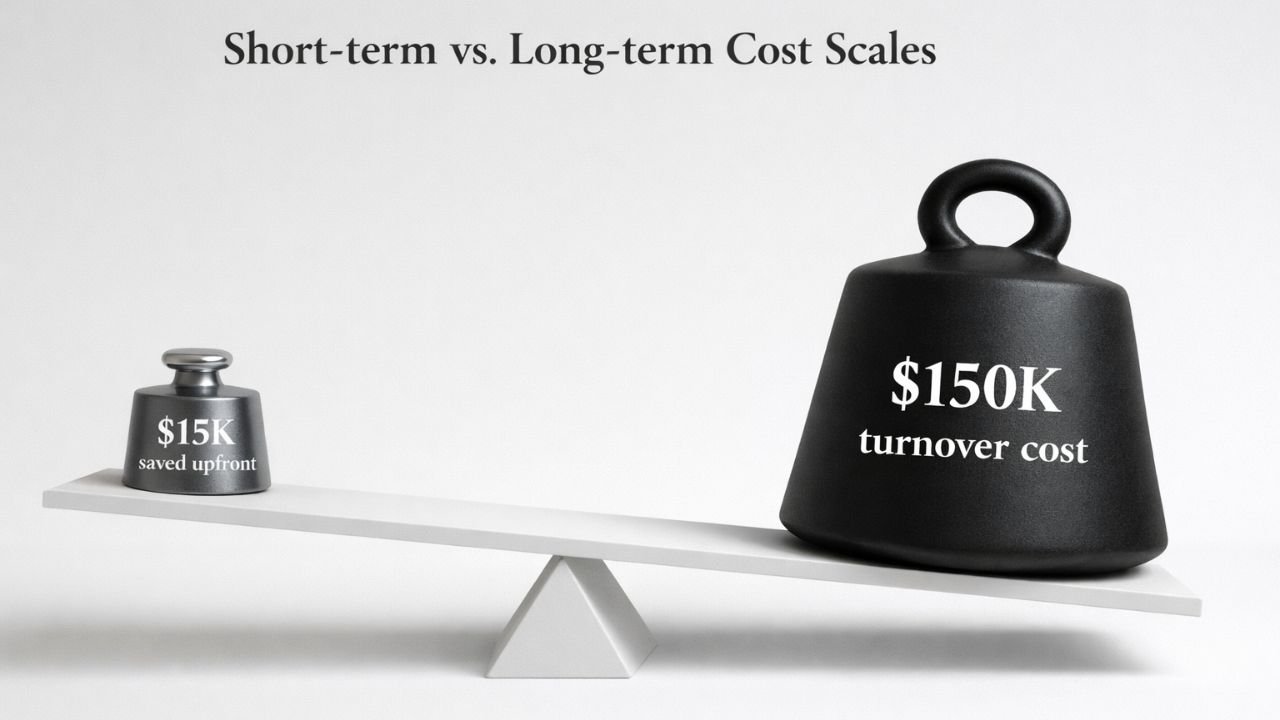
The Negotiation Paradox: Why Starting Low Costs You More Than Starting Fair
The negotiation paradox: Lowballing saves $15K upfront but costs $150K in early turnover and replacement. Fair initial offers reduce total compensation cost.

Pay Bands vs. Market Pricing: When Structure Helps (and When It Hurts)
Your pay bands lag market by 12+ months, costing you talent. But market pricing creates 20-30% variance within roles. Here's when to use structure vs. flexibility.

Pay Transparency: The Trade-offs Companies Don't Discuss
Pay transparency reduces pay gaps but exposes problems you can't ignore. Audit compensation, fix inequities, then go transparent—not the reverse. Here's how.